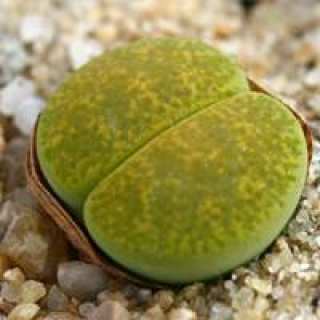
Lithops, commonly known as "living stones," are highly specialized succulent plants native to the arid, sun-scorched deserts of southern Africa. Their unique morphology and survival strategy are a direct response to their native environment, making their light requirements very specific and crucial for long-term health indoors. Providing the correct light is the single most important factor in successfully cultivating these fascinating plants.
From the plant's perspective, Lithops are obligate high-light plants. In their natural habitat, they are exposed to intense, direct sunlight for many hours each day. To replicate this indoors, they require the brightest possible light you can provide. A south-facing windowsill is the ideal location in the Northern Hemisphere, as it provides the most consistent and direct sunlight throughout the day. An unobstructed east or west window may be sufficient but is often considered the absolute minimum. They should receive at least 4 to 5 hours of direct sunlight daily, with bright, indirect light for the remainder of the day. During their winter dormancy, when water is completely withheld, high light levels are still essential to maintain their compact form and prevent etiolation.
When a Lithops does not receive enough photons to fuel its photosynthetic processes, it will undergo etiolation. This is a survival mechanism where the plant stretches unnaturally, reaching for a light source. The plant body, which should be low and compact, becomes tall, elongated, and pale. This stretched growth is weak, structurally unsound, and aesthetically displeasing. More critically, an etiolated plant is severely weakened and much more susceptible to pests like mealybugs and, most dangerously, rot. Without adequate light, the plant cannot properly complete its annual growth cycle, which includes flowering in the autumn. A lack of blooms is a clear sign that the light levels are suboptimal.
Light is the primary environmental cue that governs the Lithops' complex growth cycle. The intensity and seasonal duration of light signal the plant to transition between its phases: new leaf growth in spring and summer, flowering in autumn, and dormancy in winter. Strong light is necessary for the plant to efficiently photosynthesize and produce the energy required to develop the new leaf pair that emerges from the fissure between the old leaves. Furthermore, the energy for producing their daisy-like flowers is accumulated directly from intense summer sun exposure. Without this energy reserve, the plant will not flower.
If moving a Lithops to a significantly brighter location, such as outdoors for the summer, it must be acclimated gradually over a week or two to prevent severe sunscald. Sudden exposure to intense UV radiation can cause irreversible damage, appearing as white or brown crispy patches on the plant's surface. For homes without adequate natural light, high-quality artificial grow lights are an excellent and often necessary solution. Full-spectrum LED or T5 fluorescent lights designed for succulents should be positioned close to the plants (typically 6 to 12 inches above them) and left on for 12 to 14 hours a day to mimic the long, sunny days of their native habitat.