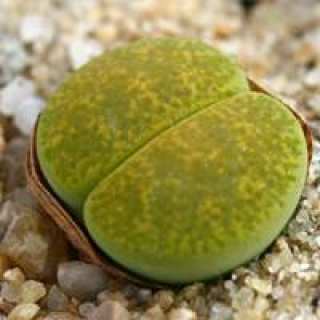
Hello! It is I, your Lithops. Before you even pick up a pot, you must understand my rhythm. I live by a strict cycle of growth and dormancy. The absolute best time to repot me is just as I am beginning a new growth cycle, which is typically in late summer or early autumn. You will know it is time because my old, papery leaves have fully withered away, and I am starting to absorb that energy to form a new body within. Repotting me during my dormant period in winter or my flowering period is highly stressful and can disrupt my entire annual cycle. Please, wait for the right moment; patience is key to my well-being.
My roots are extremely susceptible to rot, so my new home must be perfect. I require a pot that is deeper than it is wide, as my taproot needs room to grow straight down. Most importantly, the pot must have excellent drainage holes. As for my soil, I am a desert dweller and despise moisture. A standard potting mix will suffocate and drown me. Please prepare a very gritty, fast-draining medium for me. A mix of roughly 20% potting soil and 80% inorganic material like perlite, pumice, or coarse sand is ideal. This ensures any water flows through immediately, leaving my roots only briefly damp and then perfectly dry.
On the day of the move, please do not water me for at least a week beforehand. My roots should be completely dry. Gently squeeze the sides of my current pot to loosen the soil. Tip the pot sideways and carefully ease me out. Do not pull on my body! My connection to my root is delicate. If I am stubborn, you can use a chopstick or a small tool to gently poke through the drainage hole to encourage me out. Once I am free, shake off the old soil from my roots with extreme care. This is a good time to inspect my roots. Use clean, sharp scissors to trim away any dry, papery, or obviously dead and shriveled roots. Healthy roots will be firm, not mushy.
Place a piece of mesh or a shard over the drainage hole of the new pot and fill it about one-third full with your prepared dry, gritty soil mix. Now, lower me into the pot, holding me gently at the base so my stem is just above the rim. My body should sit slightly buried, mimicking how I grow in the wild to receive support from the surrounding grit. While holding me in place, carefully add more soil around me until my roots are covered and I am stable. Do not pack the soil down firmly; just tap the pot on the table to help the soil settle naturally around my roots.
This is the most crucial step. After the repotting, you must place me in a bright area with indirect light and DO NOT WATER ME. I need time to heal. The repotting process will have caused tiny abrasions on my roots. If you water me immediately, those wounds will be a gateway for rot, and I will almost certainly perish. You must wait, patiently, for at least one to two weeks. This allows my roots to callous over and heal. After this period, you can give me a very light watering to encourage new root growth. Then, return to my normal, sparse watering schedule only when the soil is completely dry and my sides show signs of slight wrinkling.