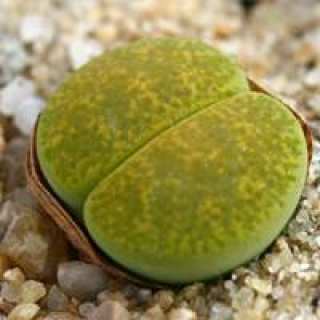
To understand the watering needs of your Lithops, you must first appreciate their origin. These plants are native to the extremely arid regions of South Africa and Namibia, where they survive in rocky deserts with minimal and highly unpredictable rainfall. Their entire evolutionary strategy is based on water storage and extreme conservation. The plant's body is composed of two fused leaves that form a single, water-filled "windowed" structure. They have a very shallow root system designed to absorb every drop of a passing rain shower quickly. Their growth cycle is perfectly synchronized with the seasons of their native land, and replicating this cycle is the single most important key to successful watering in the USA, regardless of your specific state.
Watering Lithops is not about a fixed schedule (e.g., "once a week") but about responding to their distinct physiological phases. Their year is divided into four key periods.
Phase 1: Spring (Growth Resumption) In spring, the new leaves inside the plant begin to grow, drawing moisture and nutrients from the old outer leaves. You should not water during this period. The old leaves will gradually wrinkle and shrink, morphing into a papery sheath. Watering now can cause the old leaves to remain plump and trap the new ones, leading to rot.
Phase 2: Late Summer/Fall (Active Growth Period) This is the primary watering window. Once the old leaves have completely dried into a sheath and the new body is firm but slightly soft to the touch, you can commence watering. This typically aligns with late August through October in the USA. Water deeply, soaking the soil completely, and then allow it to dry out entirely before watering again. This might mean watering every 2-3 weeks, depending on your climate, pot, and soil. Always err on the side of dryness.
Phase 3: Winter (Dormancy) As daylight shortens and temperatures drop, Lithops enter a dormant state. During this time, you must withhold all water. Their metabolism slows significantly, and any moisture in the soil combined with cool conditions will swiftly lead to fatal root rot. This complete dry period is non-negotiable.
Phase 4: Flowering (Late Fall) If your plant is mature enough, it may produce a flower in the fall. This process occurs during the active growth phase, so your normal fall watering regimen supports it. There is no need to water more frequently for flowering.
While the cycle is paramount, several external factors in the USA will influence how you interpret "dry out entirely."
Soil and Pot: Lithops must be planted in a very fast-draining, inorganic substrate. A mix of at least 80-90% mineral grit like perlite, pumice, or coarse sand is essential. The pot must have a drainage hole and be relatively shallow to match their root structure. A proper pot and soil mix dry out quickly, preventing moisture from lingering around the sensitive taproot.
Climate and Season: A Lithops kept outdoors in the humid heat of Florida will require much less frequent watering than one in the dry heat of Arizona during its active phase. Indoor conditions are also critical. A plant on a sunny, hot windowsill will use water faster than one in a cooler, shadier spot. High humidity slows evaporation, extending the drying time.
The "Touch" Test: The best indicator is the plant itself. During its active phase, you can water when the top of the plant begins to show slight signs of wrinkling or softening (like a slightly deflated balloon), and the soil is bone dry. If the body is rock hard, do not water. During its dormant and splitting phases, no amount of wrinkling should prompt watering; the plant is using its internal reserves.