Our life begins as a tiny seed, waiting in the harsh, arid soil for the perfect conditions to germinate. This typically occurs with the arrival of autumn rains, when cooler temperatures and moisture create a safe window for emergence. Upon germination, we develop a small, succulent taproot to anchor ourselves and seek water. Our first pair of leaves, known as cotyledons, appear and are responsible for initial photosynthesis. This juvenile phase is critical; we are extremely vulnerable and must establish ourselves before the intense summer heat arrives. During this period, we do not experience a true dormancy but focus all energy on building a strong foundation.
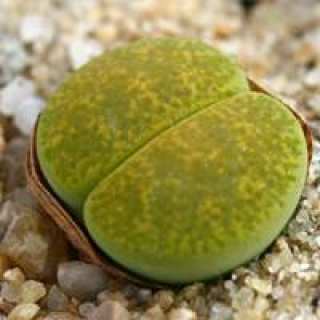
Our most distinctive feature is our pair of fused, succulent leaves that resemble stones. This is our primary adaptation for survival. Our growth cycle is intrinsically linked to the seasonal availability of water. In late spring or early summer, as day length increases and temperatures rise, we enter our dormancy period. This is a crucial survival strategy to conserve resources during the hottest, driest part of the year. Our metabolic processes slow dramatically, and we cease all visible growth. It is imperative that humans withhold water entirely during this time, as any moisture can cause us to rot, mistaking the external water for a season that has not yet arrived.
As the intense summer heat wanes and daylight hours shorten in early to mid-autumn, we break our dormancy. This is signaled by cooler night temperatures and, ideally, the first seasonal rains. This is our primary growing season. We awaken, and our roots become active again, eagerly absorbing moisture. It is during this time that our famous flowers emerge from the fissure between our leaves. The flowers, often white or yellow, open in the afternoon to attract specific pollinators and close at night. After pollination, a seed capsule develops, which will slowly mature over the following months, often protected within the dried remains of our old leaves.
Following flowering, a remarkable internal process begins. We start to develop a brand new pair of leaves from the meristem tissue deep within the fissure. Throughout the winter and into early spring, these new leaves grow by drawing water and nutrients directly from the old, outer leaf pair. This is why the outer leaves gradually soften, wrinkle, and eventually become a dry, papery sheath. This process, our form of molting, is how we grow. We are not simply adding new leaves; we are completely regenerating a new body from within the old one. The old leaves act as a protective nutrient source and shield for the delicate new growth underneath.
By late spring, the new leaf pair has fully matured, and the old leaves have been completely desiccated. The dry husks may remain for some time, offering protection from the sun. The cycle is now complete, and we are prepared with a fresh, plump body to face the impending summer drought. As the environment becomes hotter and drier, we once again slow our metabolism and enter our summer dormancy, and the entire cycle is poised to repeat itself with the return of the autumn rains.