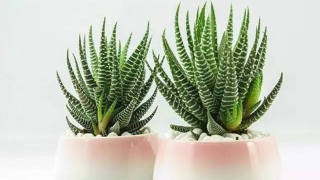
Choosing the correct pot for your Haworthia is not merely an aesthetic decision; it is a critical factor in replicating the harsh, well-draining conditions of its native South African habitat. The right pot directly supports the plant's physiological needs, preventing root rot and promoting healthy growth. The key considerations are drainage, size, and material.
From the plant's perspective, its roots are adapted to absorb water quickly during rare rainfalls and then dry out rapidly. Sitting in moisture is a death sentence. Therefore, drainage holes are the single most important feature of any Haworthia pot. A pot must have at least one sizable drainage hole at the bottom to allow excess water to escape freely after watering. Some enthusiasts prefer pots with multiple holes or even mesh bottoms for maximum aeration. Without this, water pools at the bottom of the pot, creating an anaerobic environment where harmful fungi and bacteria thrive, leading to root rot—a condition the plant's succulent roots are not equipped to handle.
Haworthias have a relatively shallow, compact root system. They actually thrive when slightly root-bound. A pot that is too large holds a greater volume of soil, which in turn retains more water for a longer period. This extended dampness far exceeds what the small root ball can absorb and creates the exact soggy conditions that cause rot. The ideal pot should be only slightly larger than the plant's root ball, typically allowing for about 1-2 cm (approximately 0.5-1 inch) of space between the roots and the pot's wall. A shallow pot is often better than a deep one, as it provides ample room for root spread without excessive soil depth that stays wet.
The material of the pot influences how quickly the soil mixture dries out, which is crucial for mimicking the dry-down cycle Haworthias require.
This is often considered the gold standard for Haworthias and other succulents. The porous nature of terracotta allows water to evaporate through the pot's walls from the soil, significantly speeding up the drying process. This provides a safety margin against overwatering and helps aerate the roots. The weight of terracotta also provides stability for top-heavy plants.
These materials are non-porous, meaning evaporation only occurs from the soil surface. This causes the potting mix to retain moisture for a much longer time. While plastic pots can be used successfully, they require a much grittier, faster-draining soil mix and a more disciplined watering approach. You must wait significantly longer between waterings compared to a plant in a terracotta pot. Glazed ceramic pots offer aesthetic appeal but function similarly to plastic in terms of moisture retention.