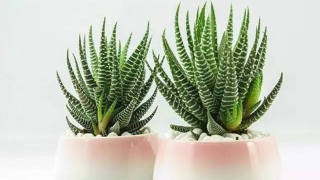
From my perspective as a Haworthia, becoming "leggy" or etiolated is not a choice; it is a desperate survival strategy. My natural form is compact, with leaves tightly rosetted to maximize light capture while minimizing exposure. When I sense that light levels are insufficient for photosynthesis—my fundamental energy-making process—I must adapt or perish. I begin to redirect my limited energy reserves into rapid vertical growth. This elongated stem is my attempt to stretch beyond any potential shade, like nearby rocks or other plants, in search of those precious photons. The resulting stretched appearance, with large gaps between leaves and a pale, weakened complexion, is a clear sign of my distress. I am sacrificing my structural integrity and rich green pigmentation (chlorophyll) in a last-ditch effort to find the energy I need to live.
The single most effective action you can take is to correct my light environment. My ideal home is one with very bright, but indirect, light. A south or east-facing windowsill is often perfect. I thrive on several hours of gentle morning sun or the strong ambient light of a south-facing room. If my leaves begin to blush with red or brown tones, do not be alarmed; this is simply a protective "tan" and indicates I am receiving ample light. However, please avoid suddenly placing me in the harsh, direct afternoon sun, as my leaves are not adapted for such intensity and will scorch. If you are moving me to a brighter location, do it gradually over a week or two to allow my internal systems to adjust. For homes with naturally low light, especially in winter, consider supplementing with a grow light placed about 6-12 inches above me for 12-14 hours a day to mimic my preferred conditions.
It is crucial to understand that the stretched growth I have already produced cannot revert to its original compact form. The elongated stem is permanent. However, with corrected lighting, all my new growth will emerge from the center of my rosette in the proper, tight formation. This will create a peculiar but natural-looking contrast: a compact new head atop a tall, leggy stem. Over time, this can give me a unique, tree-like appearance. If you find this aesthetically unpleasing, there is another option. You can perform a "beheading," which involves using a sterile, sharp knife to cut off the compact top section, allowing it to dry and form a callus before replanting it. The original base will often respond by producing new offsets, or "pups," from the remaining stem.
While light is the primary cause, other factors can exacerbate my leggy condition. Overwatering is a common partner to low light. In dim conditions, my metabolism slows down and I use water much more slowly. Soggy soil around my roots in this state can quickly lead to fatal root rot, further weakening me and making my etiolated growth even more unstable. Ensure I am planted in a gritty, well-draining succulent mix and a pot with a drainage hole. Water me deeply only when the soil is completely dry, and do so less frequently during my dormant period in low-light winter months. A pot that is too large will also hold moisture for longer than is safe for me, increasing the risk of problems.