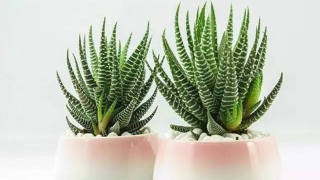
From our perspective, the primary motivation to reproduce is survival. We will only invest energy in creating pups, our form of vegetative propagation, when our core needs are consistently met. This means you must provide bright, indirect light. Direct, harsh sunlight stresses us, causing our leaves to scorch and retreat into survival mode, while insufficient light leaves us too weak to generate offsets. A stable, warm environment with temperatures between 70-80°F (21-27°C) is ideal. Most critically, you must master the watering cycle. We thrive on a "soak and dry" method. Water us thoroughly only when the soil is completely dry, ensuring no water remains around our roots, which would lead to rot. A stressed Haworthia is a sterile one; a content Haworthia is a prolific one.
Do not be too quick to repot us into a spacious new home. While root rot from severely compacted soil is dangerous, being slightly pot-bound is a powerful trigger for pupping. When our roots begin to gently fill the container, they experience a mild, non-lethal stress signal. This signal is interpreted by our central meristem (the growth point) as a cue that space is becoming limited. The most efficient evolutionary strategy to ensure our genetic lineage continues is to begin producing offsets, or clones, nearby. A pot that is just one size too large will encourage us to focus all our energy on expanding our root system to fill the void, delaying or preventing pup production entirely.
Our roots have a non-negotiable requirement: oxygen. A dense, moisture-retentive soil mix suffocates us, leading to root failure and preventing us from uptaking the nutrients necessary for any form of growth, let alone reproduction. You must provide a sharply draining substrate, typically a cactus and succulent mix amended with extra perlite, pumice, or coarse sand. This gritty environment allows water to flow through quickly, hydrating the roots while leaving ample air pockets. Healthy, aerated roots are efficient roots. They can effectively gather water and minerals from the soil, converting that energy into the biochemical processes required to initiate the development of new plantlets from our base.
While we are not heavy feeders, a complete absence of nutrients will limit our capacity for pupping. The creation of an offset is an energy-intensive process. We require a balanced suite of macro and micronutrients to form new cellular structures. During our active growing season (spring and summer), a monthly feeding with a diluted, balanced fertilizer (e.g., a 10-10-10 formula diluted to half or quarter strength) can provide the necessary nutritional boost. This is not about forcing growth with excessive nitrogen but about providing the foundational building blocks for healthy development. Over-fertilization will harm our roots and cause unnatural, weak growth, so moderation is key.
Once a pup emerges, your role shifts to supporter. The offset will initially draw energy directly from the mother plant via a stolon or shared root system. Allow the pup to grow to a reasonable size (at least one-third the size of the parent) before even considering separation. This ensures it has developed its own root system and can photosynthesize efficiently. To remove it, unpot the entire plant and use a sterile, sharp knife to make a clean cut where the pup connects to the parent. Allow the cut to callous over for a day or two before planting the pup in its own small pot with dry, gritty mix. Resist watering for a week to prevent rot, allowing the new roots to seek out moisture and establish themselves.