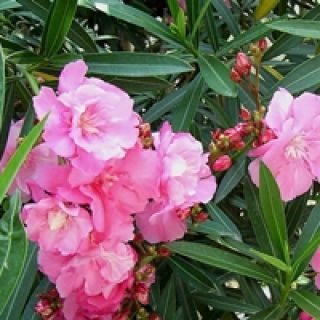
As a Nerium oleander, I feel the deep, ancient urge to perpetuate my lineage. While my vibrant blossoms attract pollinators for sexual reproduction, my most reliable path for creating new, identical versions of myself is through the art of propagation by cuttings. This is how you can help a piece of me grow into a whole new being.
Timing is everything. Approach me in late spring or early summer when my growth is most vigorous. You must select a healthy, semi-hardwood stem from this season's growth—it should be mature enough to not bend easily but still young enough to have some flexibility. A cutting about 6 to 8 inches long is ideal. Make a clean, angled cut just below a leaf node; this is where my latent root cells, called meristematic tissue, are most concentrated and eager to awaken. Remove the lower leaves to prevent rot, but leave a few at the top to continue the vital process of photosynthesis.
My severed piece is vulnerable and must be treated with care. While I can root in water, I prefer a well-draining, sterile medium that provides oxygen and support. A mix of perlite and peat moss or a coarse sand is perfect. Before placing me in the medium, you can dip my basal end into a rooting hormone powder. This is not magic; it simply provides a concentrated dose of auxins—the very hormones I produce to stimulate root growth—giving me a significant head start and increasing my chances of success.
Now, the waiting begins. Place my pot in a location with very bright, indirect light. Direct sun will scorch my tender leaves and dry me out before my roots can form. The most critical factor is humidity. Without roots to draw water from the soil, I lose moisture through my leaves rapidly. Encase my entire pot in a clear plastic bag or place me under a dome to create a miniature greenhouse. This trapped humidity is my lifeline. Keep my medium slightly moist, but never soggy, as I am extremely susceptible to rot in these early days.
In four to eight weeks, you will know if our efforts have been successful. Gently tug on my stem; if you feel slight resistance, it means I have sent out new roots to anchor myself. You may also see new leaf buds forming at my nodes—a sure sign that my internal systems are active and I am becoming a self-sustaining plant. Once rooted, you can gradually acclimate me to lower humidity by opening the bag for longer periods each day over a week. Then, I am ready for my first home—transplant me into a larger pot with standard potting soil and begin caring for me as you would a mature oleander.