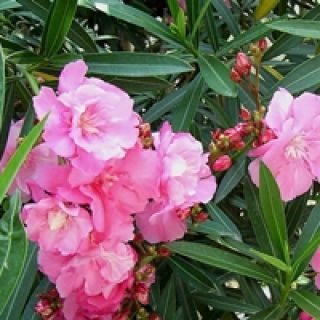
From the perspective of the oleander plant (*Nerium oleander*), thriving is about finding the ideal medium for its root system to access water and nutrients efficiently. While renowned for its toughness and adaptability, providing an optimal soil environment allows this beautiful but toxic plant to express its full potential in vigor, flowering, and disease resistance.
Oleander is exceptionally tolerant of a wide range of soil pH, but it exhibits a preference for neutral to slightly alkaline conditions. The plant's root system is most efficient at absorbing essential micronutrients like iron and manganese within a pH range of 6.0 to 8.3. In highly acidic soils (pH well below 6.0), the plant may experience nutrient deficiencies, which can manifest as interveinal chlorosis (yellowing between the leaf veins). Conversely, the plant shows no adverse effects in the alkaline soils common across the southwestern and western United States. Its adaptability to higher pH levels is a key reason for its popularity in these regions.
The single most critical soil characteristic for an oleander is excellent drainage. While the plant is drought-tolerant, its roots are highly susceptible to rot if left in waterlogged, saturated soil. The ideal soil type is a sandy loam, which provides a perfect balance: the sand ensures rapid drainage and prevents soggy conditions, while the loam (a mix of sand, silt, and clay) retains enough moisture and nutrients to sustain the plant between waterings. Heavier clay soils can be amended with coarse sand, gravel, or organic compost to significantly improve drainage and aeration, creating a more hospitable environment for the root zone.
Oleander roots require oxygen to respire and function correctly. A compacted, heavy soil suffocates the roots, leading to stunted growth and increased vulnerability to pathogens. A moderately open and well-aerated soil structure is ideal. Incorporating organic matter such as compost, well-rotted manure, or coco coir not only improves drainage but also enhances soil texture and fosters a healthy ecosystem of beneficial microbes. This loose structure allows roots to expand easily, establishing a strong anchor and a more extensive network for resource gathering.
Oleanders are not heavy feeders and often thrive in soils of moderate to low fertility. Excess nitrogen can promote an overabundance of lush, green foliage at the expense of prolific flowering. A balanced, slow-release fertilizer applied in the spring is usually sufficient for the growing season. The plant is particularly adaptable to nutrient-poor soils, a trait that contributes to its success in challenging coastal and urban landscapes. The focus should be on providing a stable, well-structured growing medium rather than a highly nutrient-dense one.