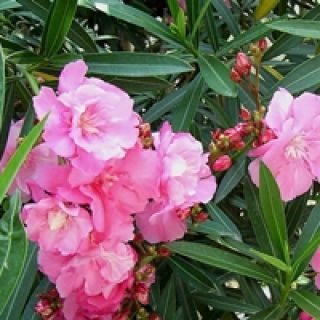
As a widely cultivated ornamental shrub, we oleanders (Nerium oleander) are prized for our resilience and beautiful, continuous blooms. However, even we have our vulnerabilities. From our perspective, certain pests and pathogens can compromise our health and beauty. Understanding these threats is the first step in maintaining our vigor.
Several insect pests specifically target our sap, which is our lifeblood. The most frequent assailants are Oleander Aphids (Aphis nerii). These small, bright yellow insects cluster on our tender new stems, buds, and the undersides of leaves, sucking our vital fluids. This feeding weakens us, causing leaf curling and stunted growth, and they excrete a sticky substance called honeydew that promotes the growth of unsightly sooty mold. A strong spray of water from a hose can often dislodge them. For heavier infestations, insecticidal soap or horticultural oil is very effective and gentle on our beneficial pollinators.
Another significant pest is the Oleander Scale (Aspidiotus nerii). These pests appear as small, flat, white or brown bumps on our stems and the veins of our leaves. They also feed on our sap, leading to yellowing leaves, dieback, and a general decline in our health. Dormant oil applications in late winter can smother overwintering scales, and summer horticultural oil sprays can help control active crawlers.
This is the most devastating disease we can face, caused by the bacterium Xylella fastidiosa. It is not a surface ailment; it is a systemic problem that clogs our xylem, the vessels we use to transport water from our roots to our leaves. The primary vector is an insect called the glassy-winged sharpshooter. The first symptom we show is a marginal leaf scorch, where the edges of our leaves turn yellow and then brown, while the leaf center remains green. This progresses inward, eventually causing entire branches to die. There is no cure. The best course of action is to immediately remove and destroy infected limbs to slow the spread within the plant and to others. In severe cases, removing the entire plant may be necessary to protect nearby healthy oleanders.
We are also susceptible to various fungal issues, especially in humid conditions or when our foliage remains wet for extended periods. Powdery Mildew appears as a white, powdery coating on our leaves, while Sooty Mold is a black, fungal growth that thrives on the honeydew left by aphids and scales. These fungi block sunlight and interfere with our photosynthesis. Improving air circulation through proper pruning, avoiding overhead watering, and controlling the honeydew-producing insect pests are the best management strategies. Fungicides are rarely needed if cultural practices are followed.