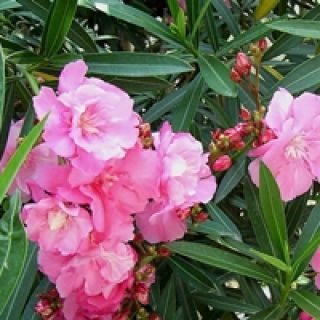
From my perspective as an Oleander (*Nerium oleander*), surviving winter is a direct challenge to my fundamental design. I am a creature of the sun-drenched, warm Mediterranean basin. My entire being—from my thick, leathery evergreen leaves designed to conserve water in arid heat, to my deep root system—is engineered for warmth. My genetic code dictates a limited tolerance for cold. I can withstand brief dips to about 20°F (-6°C), but my vascular tissues, the very pathways that carry water and nutrients, begin to freeze and sustain irreversible damage at sustained temperatures below this point. This damage manifests as blackened, mushy stems and leaves, a sign that my internal systems have been critically compromised.
The cold itself is only part of the problem. For me, winter is a multi-faceted assault. The most damaging element is often not the absolute lowest temperature, but a hard freeze that penetrates the root zone. If the soil around my roots freezes solid, it cuts off my water supply, effectively causing a fatal drought while I am frozen in place. Furthermore, winter sun and wind pose a severe threat. They accelerate moisture loss from my leaves through transpiration. Since the frozen ground prevents my roots from replacing this lost water, I essentially die of dehydration, a condition known as desiccation. This is why a cold, windy day in winter can be more damaging than a still, colder night.
My ability to survive outdoors entirely depends on the winter conditions of your specific USDA Hardiness Zone.
In Zones 8-10 (e.g., Coastal California, Southern Texas, Central Florida), I am in my element. Winters here are generally mild enough that I require no special protection. I may slow my growth, but I will remain evergreen and largely unharmed, ready to burst forth with new growth when the spring warmth returns.
In Zone 7 (e.g., parts of Virginia, North Carolina, Oklahoma), I exist on the margin. I can often survive outdoors if planted in a sheltered location, against a warm south-facing wall that radiates residual heat. Here, a deep, protective layer of mulch (3-4 inches of wood chips or pine straw) spread over my root zone is critical to insulate the soil from freezing. In particularly cold forecasts, wrapping my canopy with burlap can shield me from desiccating winds.
In Zones 6 and Below (e.g., Pennsylvania, Missouri, Illinois), the ground freezes too deeply and the cold is too severe for my survival. I cannot be left outdoors. In these regions, I must be treated as a container specimen. Before the first frost, I need to be moved into a dormant, cool (35-50°F / 2-10°C) but bright space like an unheated garage or basement. My soil should be kept barely moist to prevent my roots from completely drying out and dying, but I require no fertilizer and very little water during this dormant period.
If I have been exposed to cold, do not be too quick to judge me in early spring. I am a resilient shrub. Even if my leaves and stems appear blackened and dead, my crown and roots may have survived. The key is to wait until new growth begins to emerge. Once the danger of frost has passed, you can carefully prune back the dead wood to where you see live, green tissue. This allows me to redirect all my energy into regenerating healthy new branches and leaves from my preserved core.