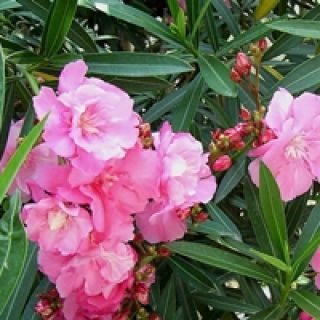
From my perspective as a Nerium oleander, I am a sun-worshipping shrub at heart. I thrive in the warmth and will perform best for you in the American climates that most closely mimic my Mediterranean origins. I am happiest in USDA Hardiness Zones 8 through 10. In these zones, my roots are safe from the devastating kill of a deep freeze. While I can tolerate a brief dip to around 15-20°F, prolonged exposure to colder temperatures will damage my stems and can be fatal. If you live in a cooler part of Zone 8 or even Zone 7, you can still host me, but I will require significant winter protection, like a thick layer of mulch over my root zone and perhaps a protective wrap for my above-ground parts.
My most critical non-negotiable need is excellent drainage. My roots absolutely abhor sitting in waterlogged soil, which quickly leads to fatal root rot. Please plant me in a well-draining spot. I am remarkably adaptable to soil types and can grow in everything from sandy to clay-heavy soils, as long as the water does not pool. I even tolerate salty, coastal soils and urban pollution, which is why I am often seen lining highways. For optimal growth, a slightly acidic to neutral pH is ideal, but I am not fussy. The single most important factor for my site is full sun exposure—at least six to eight hours of direct sunlight daily for the most prolific flowering.
To plant me correctly, begin by digging a hole that is two to three times wider than my root ball but only just as deep. This encourages my roots to spread horizontally into the native soil. Carefully remove me from my container and gently tease out any circling roots. Place me in the hole so that the top of my root ball is level with or slightly above the surrounding soil grade. Backfill the hole with the soil you originally removed, gently tamping it down to remove large air pockets. Water me deeply and thoroughly immediately after planting to settle the soil around my roots.
Once established, I am remarkably drought-tolerant. However, during my first growing season, I need consistent moisture to build my extensive root system. Water me deeply about once a week, allowing the soil to dry out slightly between waterings. After I am established, I will only need supplemental watering during prolonged periods of drought. I am not a heavy feeder. A single application of a slow-release, balanced fertilizer in early spring is sufficient to support a full season of vigorous growth and prolific blooming. Prune me in late winter or early spring to shape my form, control my size, and remove any dead or damaged branches. This will encourage lush, new growth and a spectacular flower display.
It is imperative that you understand every part of me—leaves, stems, flowers, and sap—contains potent cardiac glycosides, making me highly toxic if ingested by humans, pets, or livestock. Always wear gloves when handling me, especially during pruning when my sap is present. Be mindful of my placement in landscapes frequented by children or animals. My beauty is striking, but my defense mechanisms are serious and must be respected.