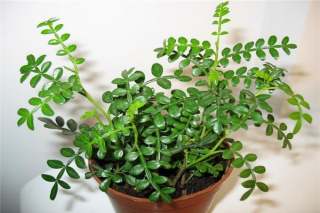
The following is a detailed explanation of the growth characteristics of Pistacia weinmannifolia from a botanical perspective, focusing on its application in landscaping.
Following germination or planting, P. weinmannifolia exhibits a moderately paced growth rate, particularly during its initial establishment phase. This period is characterized by significant energy allocation to root system development. The plant prioritizes building a deep and extensive taproot and lateral root network to secure water and nutrient resources, which is a key adaptive trait for its survival in rocky, well-drained soils. Above ground, vegetative growth—while present—is often not explosively fast during these first few years. The plant will typically focus on producing a strong central leader and a framework of primary branches. This initial investment in a robust root system is crucial for its renowned drought tolerance later in life.
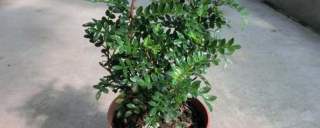
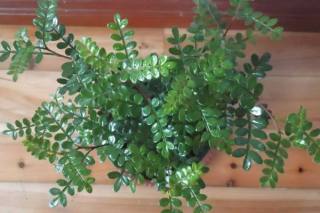
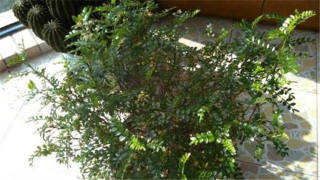
Once the root system is well-established, the above-ground growth rate increases noticeably. The species enters a more vigorous vegetative stage where it can put on 30-50 centimeters of growth annually under favorable conditions (ample sunlight, well-drained soil). The growth habit is typically upright and spreading, forming a dense, rounded, or oval canopy. The pinnately compound leaves are small and numerous, creating a fine-textured, billowy appearance that is highly valued for its visual softness in the landscape. The branches are sturdy and well-spaced, contributing to a strong overall structure that requires minimal pruning to maintain its form.
As P. weinmannifolia matures, its growth rate gradually slows, shifting energy from vertical expansion to canopy broadening and maintenance. In a cultivated landscaping setting, its ultimate size is typically managed but naturally reaches dimensions of 8 to 15 meters (25-50 feet) in height with a comparable spread. The mature form is often as wide as it is tall, creating a substantial presence. It is a long-lived species, and its wood becomes very hard and durable with age. The bark transitions from a relatively smooth grey surface in youth to a more fissured and textured appearance in maturity, adding winter interest to the landscape.
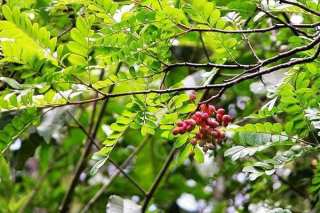
P. weinmannifolia is dioecious, meaning individual plants are either male or female. Reproductive growth typically begins once the plant has reached a certain level of maturity, often several years after planting. The flowering period occurs in spring, with inconspicuous reddish flowers held in panicles. While the flowers are not showy, the fruit on female plants can provide seasonal interest. The small, initially red drupes mature to a blue-black color and are a valuable food source for local bird populations. The species is also known for its brilliant seasonal color change, with foliage often turning striking shades of red, orange, and yellow in autumn before abscission.
From a physiological standpoint, the plant's growth pattern is a direct reflection of its adaptation to xeric environments. Its small, leathery leaves are efficient at reducing transpirational water loss. The extensive root system allows it to access water from deep within the soil profile, making it exceptionally drought-tolerant once established. In landscaping, this translates to a plant that requires minimal irrigation after its first few seasons. It thrives in full sun and is highly tolerant of poor, rocky, and alkaline soils. Its resilience to wind and heat also makes it an excellent choice for challenging urban and coastal conditions.