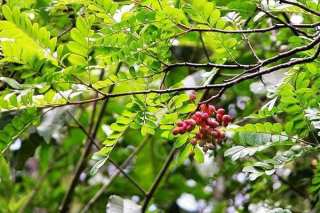
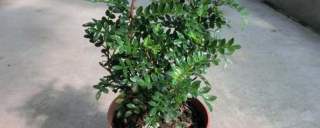
From my perspective as a Pistacia weinmannifolia seed, I represent the pinnacle of evolutionary adaptation and genetic potential. My hard endocarp is a fortress, designed by nature to protect the dormant embryo within through harsh conditions and the digestive tracts of fauna, ensuring dispersal. For the home grower, this very strength presents the first challenge: physical dormancy. I require scarification—a careful nicking or sanding of my coat—to allow water to penetrate and initiate the germination process. This mimics the natural abrasion I would experience over time in the wild.
Following this, a period of cold, moist stratification is essential to simulate winter, signaling to my internal chemistry that it is safe to emerge in spring. This process is not quick; it demands patience, often taking several months. However, the reward is a plant with a strong, deep taproot system, crucial for accessing water in arid conditions and providing exceptional drought tolerance. Most importantly, I carry a unique genetic blueprint, a combination of my parent plants, which means the resulting individual will be a genetically novel tree, potentially exhibiting slight variations in leaf form or autumn color.
As a semi-hardwood cutting taken from a mature, healthy Pistacia weinmannifolia, I offer a different path. I am a direct genetic duplicate, a clone, of the parent plant. This guarantees that the desirable traits of the mother plant—be it a specific growth habit, leaf size, or proven hardiness—will be perfectly reproduced. For the home grower seeking consistency and a quicker route to a larger plant, I am an attractive option.
My needs, however, are immediate and precise. My severed stem is vulnerable. I desperately require a humid environment to reduce transpirational water loss until I can form my own roots. This typically necessitates a propagation chamber, a mist system, or frequent manual misting. The application of a rooting hormone on my cut end is highly beneficial, as it stimulates the cellular activity needed to develop adventitious roots. My resulting root system will be more fibrous and lateral compared to the deep taproot of a seed-grown plant, which can make me slightly more susceptible to extreme drought in the very early years but often allows for faster initial canopy growth.
The choice between us fundamentally depends on the grower's goals and resources. I, the seed, demand less initial equipment but more time and understanding of dormancy-breaking techniques. I am the choice for a purist, a patient gardener interested in the full life cycle and the surprise of genetic variation. My robust taproot makes me exceptionally resilient once established.
I, the cutting, provide predictability and a faster transition to a recognizable sapling. However, I require more hands-on care in the form of humidity control and protection during the critical rooting phase. There is also the consideration of plant vitality; taking too many cuttings from a single parent can be detrimental to its health. For a home grower with access to a prized specimen and the means to create a humid propagation space, I represent the most efficient method for replication.