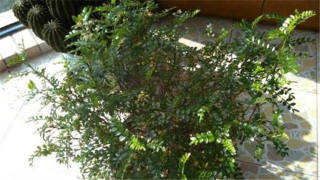
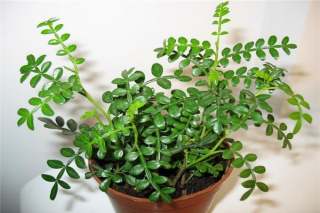
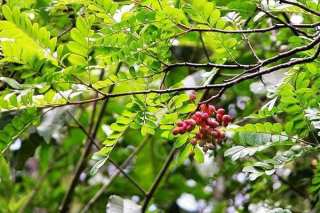
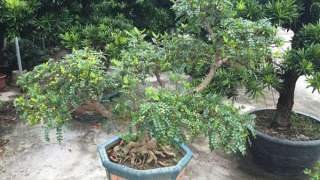
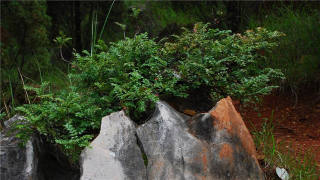
Pistacia weinmannifolia, a member of the Anacardiaceae family, is a deciduous shrub or small tree native to the rocky slopes and valleys of southwestern China and adjacent regions. Its ability to survive cold winters is a primary concern for gardeners and landscapers outside its native habitat. This survival is intrinsically linked to the plant's physiological adaptations and its alignment with the USDA Plant Hardiness Zone Map, which defines the average annual extreme minimum winter temperature.
In its native environment, Pistacia weinmannifolia experiences seasonal changes, including cool to cold winters. From a botanical perspective, this has led to the evolution of crucial survival mechanisms. As a deciduous species, it undergoes a period of dormancy. As autumn progresses and photoperiod shortens and temperatures drop, the plant initiates a process called cold acclimation. It ceases active growth, sheds its leaves to minimize water loss through transpiration, and redirects energy resources to its root system and core structure. Within its cells, it increases the concentration of solutes (like sugars and proline) which act as a natural antifreeze, lowering the freezing point of cell contents and preventing the formation of large, damaging ice crystals that can rupture cell membranes.
The USDA Hardiness Zone system is the standard guide for determining which plants are likely to thrive at a given location. Based on observed performance in cultivation, Pistacia weinmannifolia is generally rated for USDA Zones 7a to 10b. This translates to an average annual extreme minimum winter temperature range of 0°F to 5°F (-17.8°C to -15°C) for Zone 7a, up to 35°F to 40°F (1.7°C to 4.4°C) for Zone 10b. The plant's survival threshold is typically around 0°F to 5°F (-17.8°C to -15°C). Prolonged exposure to temperatures significantly below this range, especially without a proper period of acclimation in the autumn, will likely cause severe dieback or kill the plant entirely. The root system is particularly vulnerable if the ground freezes solid for an extended period.
While the zone rating provides a fundamental guideline, several other factors from the plant's perspective are critical for winter survival. Excellent soil drainage is paramount. Pistacia weinmannifolia is highly adapted to well-draining, often rocky soils. Wet, waterlogged soil in winter is far more dangerous than cold, dry soil, as it promotes root rot and suffocation, preventing the plant from taking up water when needed and making it more susceptible to freeze damage. Furthermore, the plant's maturity and exposure play a role. A young, newly planted specimen is far more vulnerable to cold than a well-established one with a deep and extensive root system. Planting in a sheltered location that protects it from harsh, desiccating winter winds can also prevent winter burn and desiccation of stems.