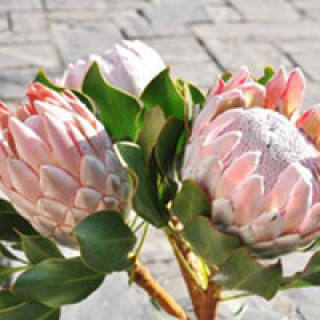
The lifespan of a potted Protea plant is a complex topic, as it is influenced by a delicate interplay between the plant's inherent biological nature and the artificial environment of a container. From the plant's perspective, a pot represents a significant constraint on its evolutionary adaptations. Understanding this perspective is key to maximizing its longevity.
First and foremost, it is crucial to understand that Proteas are not annuals or typical houseplants. In their native habitats, primarily the fynbos regions of South Africa, they are woody, evergreen perennial shrubs. From a botanical standpoint, many species are capable of living for several decades in the wild. Their root systems are extensive and finely tuned to seek moisture and nutrients from well-drained, often nutrient-poor, sandy soils. They are adapted to full sun, good air circulation, and a specific cycle of wet and dry seasons. This inherent genetic programming for a long life in open ground is the first factor defining their potential lifespan.
The single greatest factor determining the lifespan of a potted Protea is the container itself. For the plant, a pot is a severely restricted root zone. This limitation triggers a cascade of stresses. The roots, which are genetically programmed to spread widely, quickly become pot-bound. This circling and constriction of the root system impedes the plant's ability to uptake water and nutrients efficiently, leading to chronic stress. Furthermore, the soil in a container is more susceptible to temperature fluctuations, drying out rapidly, and, critically, staying waterlogged if overwatered. Protea roots are highly susceptible to fungal pathogens like Phytophthora root rot, and a consistently moist, poorly aerated potting mix creates an ideal environment for these pathogens to attack and kill the root system, effectively ending the plant's life prematurely.
Given the constraints of container life, the lifespan is directly proportional to how well the cultivation conditions mimic the plant's natural needs. A potted Protea provided with optimal care might live healthily for 5 to 7 years, or even longer, before the constraints of the pot become too severe. This requires:
Soil: A very sharp-draining, acidic (low pH) potting mix, often based on bark, sand, and perlite, is non-negotiable. It must resist compaction and allow oxygen to reach the roots.
Watering: The plant requires a cycle of thorough watering followed by the soil drying out significantly. Constant moisture is fatal.
Nutrients: Proteas are adapted to low-phosphorus soils. Standard fertilizers are often toxic to them, causing root burn and death. A specialized, low-phosphorus, slow-release fertilizer is essential.
Sunlight: They require a minimum of six hours of direct, full sun daily. Insufficient light weakens the plant, making it susceptible to disease and reducing its lifespan.
From the plant's perspective, its life in a pot follows a distinct trajectory. After an initial establishment period, it will enter a productive phase of flowering for several years. However, as the root system becomes increasingly congested, signs of decline will appear. These include reduced flowering, smaller leaf size, yellowing or browning of leaves (often starting from the bottom), and general stunting. At this stage, the plant is under significant stress. While it is possible to carefully repot a young Protea into a slightly larger container with fresh, appropriate soil, this is a delicate operation that can shock the plant. Often, the long-term viability of a potted Protea is limited, and it may be more practical to propagate new plants from cuttings to continue the cycle rather than expecting a single potted specimen to live for decades.