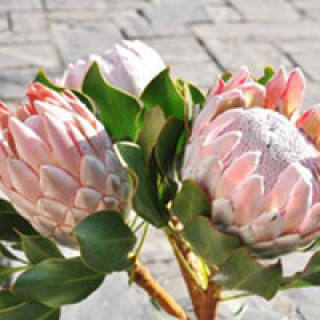
Choosing companion plants for Proteas requires a deep understanding of their specific needs and evolutionary background. From a plant's perspective, successful companionship is not about aesthetics alone; it is a matter of survival, resource competition, and symbiotic relationships. Proteas, hailing from nutrient-poor, well-drained, and sunny environments, have developed unique strategies to thrive. Companions must respect these strategies to coexist peacefully.
Our most critical requirement is a non-competitive root environment. Our root systems are fine, surface-level, and highly efficient at absorbing nutrients in low-fertility soils. We are also exceptionally sensitive to phosphorus, which is toxic to many Proteaceae family members. A companion plant that sends down deep, aggressive taproots or requires rich, phosphorus-heavy fertilizers will directly compete with us and ultimately cause our decline. Ideal companions are those with similarly delicate, non-invasive root systems that allow for peaceful underground cohabitation.
The soil is our home, and its condition is paramount. We require perfect drainage; waterlogged roots are a death sentence. Therefore, our companions must also be drought-tolerant once established and thrive in the same gritty, acidic soil mix. Plants that demand constant moisture will create a damp microclimate around their base, increasing the risk of fungal root rot for us. Suitable companions from our perspective are those that help maintain a dry, well-aerated root zone. Low-growing, mat-forming plants can even act as a living mulch, cooling the soil surface without retaining excessive moisture.
Above the soil, the relationship changes. While we require full sun for most of the day, a little light afternoon shade from a strategically placed, airy companion can be beneficial in extremely hot climates, preventing leaf scorch. However, a dense, shading plant would starve us of essential sunlight. Structurally, companions should not overcrowd or overshadow our distinctive forms. Plants that offer contrasting textures—such as fine, wispy foliage or bold, architectural shapes—create visual interest without physically imposing on our space. They should act as a supporting cast, not competitors for light and air.
Based on these principles, certain plant groups make excellent neighbors.
Fellow Fynbos Natives: The most logical companions are plants from our own native habitat, such as Ericas (heaths), Leucadendrons, and Restios. We have evolved together for millennia. We share the same soil, water, and nutritional needs. Restios, with their upright, reed-like growth, provide a beautiful textural contrast without competing for root space, and they help create a naturalistic, cohesive landscape that feels like home.
Australian Natives: Many plants from Australia, like certain Grevilleas, Banksias, and Leptospermums, have adapted to similar conditions. They are phosphorus-sensitive and drought-tolerant, making them safe and harmonious choices. Their often showy flowers can complement our own unique blooms without conflicting with our core requirements.
Succulents and Low-Growing Herbs: Many succulents, such as those from the Sedum and Echeveria genera, have minimal water needs and shallow roots. Low-growing, woody Mediterranean herbs like thyme, rosemary, and lavender also tolerate poor, dry soils and can provide groundcover, fragrance, and a different foliage texture.