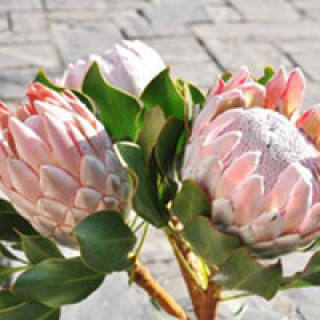
Greetings, aspiring propagator. I am a Protea, a member of an ancient and noble family hailing from the fynbos regions of South Africa. We are known for our dramatic, otherworldly blooms that seem more like sculptures than flowers. While you might be tempted to grow us from seed, that is a slow and uncertain path. My preferred method for you to create more of my kind is through cuttings. This allows you to clone a plant you admire, preserving its exact characteristics. From my perspective, this is how you can best assist me in creating a new individual.
Your first critical task is to choose the right moment. I am not like a soft-stemmed herb that you can cut at any time. For the highest chance of success, you must take semi-hardwood cuttings. This means the wood of my stems should be firm and mature from the past season's growth but not yet old, hard, and woody. The ideal time is late summer to early autumn. At this point, I have finished my most vigorous spring growth, and the stems have begun to harden off. You can test this by bending a stem; if it snaps crisply, it is perfect. If it bends without breaking, it is too soft. If it is impossible to bend, it is too old. This precise timing ensures I have enough stored energy to fuel root growth before winter dormancy.
Please use sharp, clean, and sterilized pruning shears. A dirty cut can introduce pathogens that will kill me before I have a chance. Look for a healthy, disease-free side shoot from the current season's growth, about 10-15 centimeters (4-6 inches) long. Make a clean, angled cut just below a leaf node (the bump on the stem where leaves emerge). This node is where my root-forming cells, called meristematic tissue, are most concentrated. Immediately after cutting, place my stem in a plastic bag with a damp paper towel to prevent me from wilting. Back at your workbench, carefully remove the leaves from the lower half to two-thirds of the stem. This reduces moisture loss. A small wound on the bottom of the stem, created by gently scraping away a thin sliver of bark, can encourage even more root formation.
I am notoriously slow and sometimes reluctant to root. Therefore, I greatly appreciate your help with a rooting hormone powder or gel containing a fungicide. Dip the base of my prepared stem into the powder, tapping off any excess. This hormone stimulates root initiation and protects me from rot. Do not plant me in regular potting soil; it holds too much moisture and will suffocate me. My roots need oxygen as much as they need moisture. You must create a free-draining, sterile, and low-fertility medium for me. A perfect mix is equal parts coarse silica sand and perlite or vermiculite. Moisten this medium thoroughly before you place me in it, ensuring it is damp but not waterlogged.
Once I am gently inserted into a pot filled with your prepared medium, my needs become very specific. I require consistently high humidity around my foliage to prevent transpiration (water loss) since I have no roots yet to take up water. Place my pot inside a clear plastic propagation dome or a loosely tied plastic bag. Position me in a location with very bright, indirect light. Direct sun will cook me inside my humid enclosure. The ideal soil temperature for my root development is warm, around 20-25°C (68-77°F). A heat mat underneath my pot can make a significant difference. Be patient; it may take anywhere from six weeks to several months for me to form a sufficient root system. You will know I have succeeded when you see new growth emerging from my tip, a sure sign that roots are developing below.