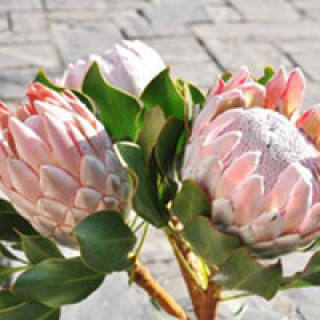
From our perspective as Protea plants, thriving in our native, well-drained, sunny habitats, we are remarkably resilient. Our tough, leathery leaves and unique flower structures are evolutionary marvels. However, when cultivated outside our ideal conditions or when under stress, we become vulnerable to a range of pests that see us not as a botanical wonder, but as a source of food and shelter. Here is a detailed account of the common adversaries we face.
These pests are perhaps the most frequent and frustrating we encounter. They use piercing mouthparts to tap into our vascular system, sucking out the nutrient-rich sap that is essential for our growth and flowering. The damage is twofold: they weaken us directly by stealing our food, and they often leave behind secondary problems.
Aphids: These small, soft-bodied insects cluster on our new, tender shoots and the undersides of young leaves. Their feeding causes leaf curling and stunted growth. More alarmingly, they excrete a sticky substance called honeydew, which attracts ants and promotes the growth of sooty mold, a black fungus that coats our leaves and interferes with photosynthesis.
Scale Insects: These pests are more insidious. They attach themselves to our stems and the midribs of our leaves, often resembling small, waxy bumps rather than insects. They remain stationary, feeding continuously and sapping our strength. A severe infestation can cause yellowing leaves, dieback of branches, and a general decline in our health, making us susceptible to other diseases.
Thrips: These tiny, slender insects are particularly damaging to our most prized possession: our flowers. They rasp the surface of our developing flower buds and petals, sucking up the exuding sap. This results in silvery streaks, brown scars, and distorted, disfigured blooms that are often unsalvageable. They can also attack young leaves, causing them to appear puckered and pale.
Our spectacular flower heads, which take so much energy to produce, are a prime target for several pests. Their damage is not just cosmetic; it strikes at the very heart of our purpose—reproduction.
Protea Beetles (or Pollen Beetles): Certain beetle species, like the Genuchus genus, have a particular affinity for our flowers. The adults and larvae feed directly on the pollen and the florets within the flower head. They can hollow out the entire inflorescence, leaving behind a mess of frass (insect waste) and completely destroying the bloom's structure and viability.
Caterpillars: The larvae of various moths and butterflies may bore into our flower buds or developing shoots. They tunnel through the tender tissues, often going unnoticed until the bud fails to open or a shoot suddenly wilts and dies. Their feeding holes can also provide an entry point for fungal pathogens.
While above-ground pests are visible, the ones that attack below the soil line are especially dangerous because their damage is often advanced before any symptoms show on our foliage.
Root-Knot Nematodes (Meloidogyne spp.): These microscopic roundworms are a grave threat, particularly in sandy soils. They invade our root system, causing the formation of characteristic galls or knots. These galls disrupt our ability to uptake water and nutrients effectively. The first signs you might see above ground are our leaves yellowing, wilting during the heat of the day, and a general lack of vigor, even with adequate water and fertilizer.
Snails and Slugs: These mollusks are most active at night and during damp weather. They chew irregular holes in our leaves and, more critically, can devour our young, succulent seedlings and new shoots emerging from the crown. Their slimy trails are a tell-tale sign of their presence.
Beyond insects, larger animals can also cause significant damage. Rats and mice may gnaw on our bark and stems, especially during dry periods. In some regions, birds may peck at our flower heads, either seeking insects hidden within or the nectar itself, which can spoil the appearance of the blooms.