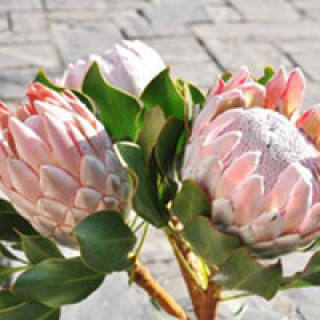
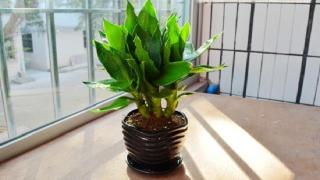
For the Protea plant, a survivor from an ancient lineage adapted to some of the world's most nutrient-poor and well-drained soils, soil pH is not merely a preference but a matter of survival. Getting the pH right is arguably the single most critical factor for success when growing these magnificent plants in containers. From the plant's perspective, the correct pH ensures that the delicate balance of nutrient availability and root function is maintained, preventing the toxicities and deficiencies that are often fatal to this genus.
From our root's perspective, the optimal soil pH for a potted Protea lies within a narrow window of 5.5 to 6.5. This slightly acidic to neutral range is the sweet spot where the majority of essential nutrients remain soluble and available for uptake. Within this range, the fine, delicate root hairs that are responsible for absorbing water and minerals can function efficiently without being chemically burned. Straying outside this range triggers a cascade of problems that directly impact our health and vitality.
A soil pH above 6.5, moving into alkaline conditions, is particularly dangerous for us. In alkaline soils, key micronutrients essential for our growth, especially iron, manganese, and phosphorus, become chemically locked up and unavailable. Even if these nutrients are present in the potting mix or fertilizer, our roots cannot access them. This leads to a condition known as chlorosis, where our leaves turn a sickly yellow between the veins while the veins themselves remain green. This is a sign of starvation at a cellular level. Furthermore, in alkaline conditions, phosphorus binds with calcium to form insoluble compounds, further depriving us of a vital nutrient needed for energy transfer and root development.
While we are acid-loving plants, a pH that drops too low, below 5.0, presents a different set of threats. In highly acidic conditions, the solubility of certain elements increases to toxic levels. Aluminum and manganese, which are relatively harmless at a pH of 5.5, can become soluble in high concentrations at a lower pH, poisoning our root system. This toxicity damages the root tips, inhibiting their ability to absorb water and nutrients, leading to stunted growth, leaf scorch, and eventual root death. An overly acidic environment can also leach away essential calcium and magnesium, causing further deficiencies.
Our survival strategy in native habitats involves a symbiotic relationship with soil fungi, forming a structure known as proteoid roots. These dense clusters of short lateral roots massively increase the surface area for nutrient absorption. The fungi (mycorrhizae) associated with these roots are highly specialized and thrive only within a specific acidic pH range. If the soil pH is incorrect, this vital symbiotic relationship fails to establish or is disrupted. Without our fungal partners, we lose our supercharged ability to extract the scant nutrients from the soil, making us weak and susceptible to decline, especially in the confined environment of a pot where we cannot search for better conditions.
In a pot, we are entirely at the mercy of the gardener. Unlike in the ground, we cannot send our roots out to find a more favorable spot. The limited volume of soil means pH fluctuations can happen rapidly. The primary cause of rising pH (increasing alkalinity) is often the water used for irrigation. Tap water, particularly in hard water areas, is frequently alkaline. Each watering can slowly but steadily drive the pH of our potting mix upwards. Therefore, using rainwater or pH-adjusted water is crucial for our long-term health. The potting medium itself must be formulated with an acidic base, such as peat moss or coconut coir, and the use of limestone or dolomite lime, common in many potting mixes, must be avoided as they will raise the pH to lethal levels.