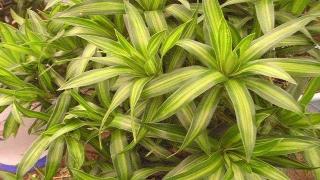
While Lucky Bamboo (Dracaena sanderiana) is almost exclusively sold growing in water, it is a terrestrial plant by nature and can indeed grow successfully in soil. The choice between water and soil cultivation presents different advantages and challenges from the plant's perspective, impacting its root development, nutrient availability, and long-term health.
From a botanical standpoint, soil is the natural environment for Dracaena sanderiana. Its root system is evolutionarily designed to anchor itself in a solid medium and extract water and nutrients from the spaces between soil particles. When planted in a well-draining, aerated potting mix, the roots can develop a strong, fibrous structure. This allows for efficient uptake of a broader spectrum of micronutrients that are naturally present in soil but are absent in plain water. The physical support of the soil also promotes the development of a sturdier, more resilient plant structure, allowing it to support taller growth without toppling over.
Growing in water is a successful adaptation for this resilient plant, but it comes with specific conditions. The primary advantage from the plant's view is the constant availability of water, eliminating the risk of drought stress. However, this environment is fundamentally different from soil. Roots grown in water are morphologically distinct; they are often finer, less fibrous, and more adapted to absorbing oxygen directly from the water. The major challenge is oxygen deprivation. Without proper aeration (often ensured by changing the water frequently), the roots can suffocate and rot. Furthermore, water contains no nutrients. The plant's survival depends entirely on the dilute fertilizer added by the caretaker, which can lead to deficiencies or, if overdone, chemical burns on the roots.
Nutrient Availability: Soil provides a complex, slow-release reservoir of nutrients. A plant in soil has access to a wider array of elements necessary for robust, green growth and overall vitality. In water, nutrition is limited to what is dissolved, making the plant entirely dependent on a perfectly balanced and consistent fertilizing regimen.
Root Health and Stability: Soil encourages a strong, branching root system that firmly anchors the plant. Water roots are more fragile and provide less physical support, making taller plants prone to leaning. The risk of root rot is generally higher in stagnant water than in well-draining soil, where excess moisture can percolate away.
Long-Term Growth and Size: While both methods can sustain the plant, soil typically supports more vigorous and larger growth over the long term. A Lucky Bamboo in a suitably sized pot with quality soil has the space and resources to grow taller and develop more canes, whereas a plant confined to a vase of water will have its size limited by the container and the simplicity of its nutrient source.
It is possible to transition a Lucky Bamboo from water to soil, but the plant requires a period of adjustment. Water roots are not immediately equipped to function in soil. The transition must be handled carefully by keeping the soil consistently moist (but not soggy) for the first several weeks to allow the roots to adapt to their new environment. A sudden move from water to typical potting soil can shock the plant, as the water roots may struggle to absorb moisture from the soil particles, leading to wilting.