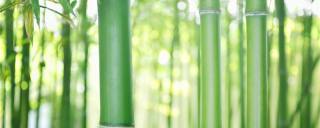
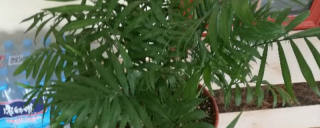
First, it is crucial to understand what I am. Despite my common name, Lucky Bamboo, I am not a bamboo plant at all. I am a Dracaena sanderiana, a member of the lily family. This distinction is fundamental to my nutritional needs. True bamboos are heavy feeders, often requiring rich soil and regular fertilization. I, however, have evolved as a relatively low-nutrient plant. My natural habitat is the shaded, tropical forest floor, where I receive nutrients from the slow decomposition of leaf litter. My roots are adapted to this environment and are therefore quite sensitive to the high mineral salt concentrations found in most standard fertilizers. Applying a fertilizer designed for a heavy-feeding plant is akin to force-feeding me a meal far too rich for my delicate system, leading directly to root burn.
When you apply a standard, overly strong fertilizer to my water or soil, you are introducing a high concentration of soluble salts. My roots function through osmosis, a process where water moves from an area of low solute concentration (the soil or water) into an area of high solute concentration (inside my root cells). When the external environment becomes hyper-concentrated with salts from fertilizer, this process reverses. Instead of absorbing water, my roots lose it to the surrounding solution. This is called plasmolysis, and it is what you perceive as "burning." The root cells dehydrate, collapse, and die. Visibly, you will see my roots turn brown or black and become soft and mushy. Without healthy roots, I cannot uptake water or the few nutrients I actually need, leading to yellowing leaves, stunted growth, and eventually, my demise.
To nourish me without causing harm, you must choose a fertilizer that aligns with my minimal requirements. The safest option is a specialized, water-soluble fertilizer formulated for Dracaena plants. If that is unavailable, a fertilizer for foliage plants or, even better, an orchid fertilizer is a suitable alternative because these are typically very mild. The key is dilution. You should use a fertilizer at a quarter or even half the strength recommended on the product's label for standard houseplants. For example, if the instructions say to mix one teaspoon per gallon of water, you should use only a quarter teaspoon for me. Furthermore, the nutrient balance is important. Look for a formula that is balanced or one with a slightly higher nitrogen (N) content to support my green leaf growth, such as a 10-10-10 or 5-5-5 NPK ratio. Most critically, ensure the fertilizer contains no fluoride or low fluoride, as I am particularly sensitive to it.
My growth is slow and deliberate, and my feeding schedule should reflect this. I do not need constant nourishment. The primary growing season for me is during the longer, brighter days of spring and summer. This is the only time you should consider feeding me. A single, gentle feeding at the beginning of the season is often sufficient to support my growth for months. For plants grown in water, add the highly diluted fertilizer solution to the water you use to top up my vase. For plants in soil, apply the diluted solution to pre-moistened soil to prevent shocking my dry roots. During the autumn and winter, when my growth naturally slows to a near halt, you must cease fertilization entirely. My metabolic processes are minimal, and any fertilizer applied will simply accumulate in the water or soil, increasing the salt concentration and guaranteeing root burn.
After you have provided a diluted feeding, your care is vital to prevent a slow buildup of salts. If I am growing in water, my water should be changed with fresh, clean water every two weeks. This practice flushes out any residual fertilizer salts, preventing them from reaching a toxic concentration around my roots. When you change the water, take a moment to gently rinse my roots under lukewarm, slow-running water to wash away any salt deposits. If I am planted in soil, the best practice is to water me thoroughly until water runs freely from the drainage holes. This technique, known as leaching, helps to flush excess salts from the soil. Always ensure my container has adequate drainage to prevent waterlogged conditions, which are as harmful as fertilizer burn.