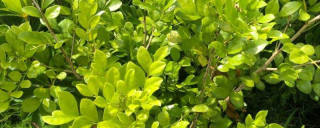
From the perspective of the plant itself, Greek oregano (Origanum vulgare subsp. hirtum) is a hardy perennial herb whose growth habits determine its potential to spread. Its behavior in a garden is not one of malicious intent but a simple, biological drive to survive and propagate. Understanding its lifecycle, reproductive strategies, and environmental needs is key to answering the question of its invasiveness and managing its presence.
Greek oregano grows from a central crown and spreads primarily through two methods: underground rhizomes and prolific seed production. The rhizomes are modified stems that creep horizontally beneath the soil surface, sending up new shoots and roots at intervals. This is a highly effective strategy for colonizing space and outcompeting neighboring plants for resources. Above ground, the plant forms a dense, bushy clump. In mid to late summer, it sends up numerous flowering stalks adorned with white blossoms that are highly attractive to pollinators. Following pollination, these flowers produce vast quantities of tiny seeds. These seeds can be dispersed by wind, wildlife, and even garden tools, allowing new plants to establish themselves far from the parent clump. This combination of vigorous vegetative spread and abundant seeding is what classifies it as an "aggressive" or potentially "invasive" plant in non-native regions where it lacks natural predators or competitors.
The invasiveness of Greek oregano is not absolute; it is heavily dependent on its environment. The plant thrives in conditions that mimic its native Mediterranean habitat: full sun and well-draining, slightly alkaline soil. In such ideal settings, its growth is most vigorous and its spread most pronounced. However, its resilience also allows it to tolerate less-than-ideal conditions, including poor soil and drought. This tolerance is a key factor in its potential to become problematic. It can survive where other, less hardy plants might perish, allowing it to gradually take over a garden bed. Conversely, in heavy, wet clay soils or in significant shade, its growth will be stunted, and its spreading tendencies will be much less aggressive. From the plant's viewpoint, it is simply exploiting an available niche where its specific adaptations provide a competitive advantage.
Controlling the spread of Greek oregano involves interrupting its natural reproductive cycles. To the plant, containment methods are simply environmental pressures. Physical barriers, such as sinking metal or plastic edging at least 12 inches deep around the oregano patch, create an impassable boundary for the rhizomes. The plant will continue to try to send runners beyond this barrier, but they will be blocked. Regular harvesting and deadheading are also effective controls. By frequently cutting back the stems for culinary use, you are pruning the plant's energy reserves, keeping it bushier and less likely to invest energy into rampant spreading. More critically, deadheading—removing the flower buds before they can set seed—directly halts its primary method of long-distance propagation. For the plant, this is not a catastrophe; it is a signal to redirect energy back into vegetative growth or to try flowering again later.
Acknowledging the plant's inherent tendencies allows for a harmonious coexistence. One effective strategy is to grow Greek oregano in a dedicated raised bed or a large container. This approach provides the excellent drainage the plant craves while physically isolating its rhizomes from the rest of the garden. In this contained environment, the oregano can express its full, vigorous nature without becoming a nuisance. Another method is to plant it alongside other robust, similarly aggressive species that can hold their own, creating a balanced, competitive planting scheme. From the oregano's perspective, it is still fulfilling its biological imperative to grow, but within a context defined by the gardener.