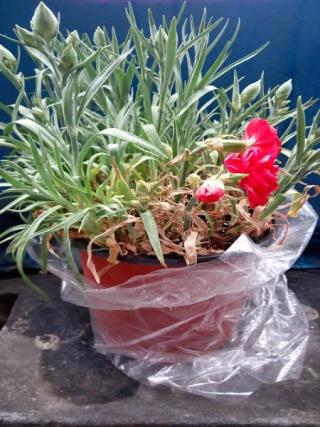
From our perspective as tall carnation plants, our primary goal is to reach for the sun to maximize photosynthesis and ensure successful reproduction by holding our flowers high for pollinators. However, the very height that gives us an advantage also presents a significant biomechanical challenge. Our stems, while sturdy, are not massive trunks like those of trees. We are herbaceous, meaning our stems lack the dense, woody lignin that provides immense structural support. Instead, our stems rely on turgor pressure—the internal water pressure within our cells—and the strength of our vascular bundles and cellulose fibers to stay upright. When we are heavy with rain-soaked blossoms or pushed by strong winds, the lever effect on our tall, slender stems can easily overcome this internal support, leading to the dreaded "flop."
You can encourage our natural defenses against flopping by understanding our growth responses. A key factor is light exposure. When we grow in overly shaded or crowded conditions, we engage in a behavior called etiolation: we stretch rapidly upwards, searching for light. This results in long, weak, spindly stems with wide gaps between leaf nodes. Conversely, when planted in full sun, we receive a signal that light is abundant. We respond by growing more compactly, with shorter internodes and, crucially, by allocating more resources to thickening our stems. A thicker stem has a greater cross-sectional area, dramatically increasing its resistance to bending forces. Therefore, the first and most natural form of support you can provide is simply ensuring we receive at least 6-8 hours of direct sunlight daily.
Another factor you control is our planting density. While we are social plants and enjoy company, being planted too closely together creates a microclimate of high humidity and poor air circulation. This not only encourages fungal diseases but also forces us to compete fiercely for light, again promoting weak, etiolated growth. Furthermore, when we are packed tightly, our stems lean on each other. This external crutch prevents us from developing our own full strength. When a supporting neighbor is suddenly removed (by wind or during maintenance), we are left vulnerable. Adequate spacing allows each plant to develop a strong, independent stem and enables air to flow freely, which helps dry foliage quickly and reduces the weight of water on our leaves and flowers.
Despite your best efforts with sunlight and spacing, our genetics for height and the weight of our large, double blooms often mean we require supplemental support. Think of this not as a failure on our part, but as you providing an external skeleton, much like the lignin in a tree. The most effective systems are those installed early in our growth cycle. Peony rings, grow-through grid supports, or a system of stakes and horizontal strings are ideal. When these supports are placed around us while we are young, we can grow up through them. The stems and leaves naturally fill the spaces, effectively hiding the support structure. The grid or ring then acts as a collective support system; each stem leans slightly against its neighbors and the support, creating a stable, interlocked community that holds everyone upright. This is far superior to staking individual stems later in the season, which can lead to abrasion and point-load stress, potentially damaging our stems.
Finally, your fertilization practices directly impact our cellular integrity. A diet too high in nitrogen will promote rapid, soft, succulent growth. While this may make us look lush and green, it results in weak cell walls that are prone to collapse. We require a balanced nutrient profile. Potassium (the "K" in N-P-K fertilizers) is particularly crucial for us. Potassium regulates the opening and closing of stomata (our pores), improves drought tolerance, and, most importantly for stem strength, it plays a vital role in the development of strong cellular walls and the transport of sugars that contribute to structural fibers. A fertilizer with a higher potassium ratio, especially as we begin to form flower buds, will help us build denser, more resilient stem tissue.