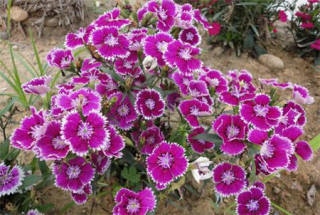
From our perspective as carnation plants (Dianthus spp.), the container you choose and the medium you fill it with are not just decorative choices; they are the fundamental boundaries of our world. They dictate our access to water, air, and nutrients, and ultimately, determine whether we will merely survive or truly thrive, bursting with the vibrant blooms you desire. To help you create an ideal home for us, here is a detailed guide from the root up.
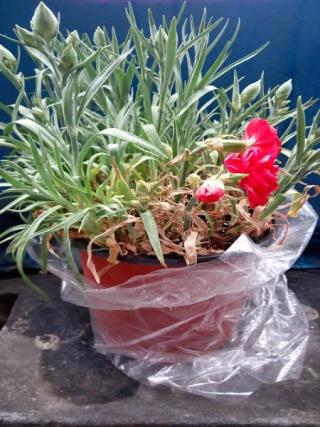
First and foremost, we require excellent drainage. Our roots are highly susceptible to rot if left sitting in waterlogged soil. Therefore, the container must have multiple, generous drainage holes at the bottom. A pot without holes is a death sentence for us. The material of the pot is also significant. Terra cotta or clay pots are excellent choices because they are porous, allowing the soil to breathe and dry out more evenly between waterings, which our roots appreciate. However, they dry out faster, meaning you will need to water us more frequently. Glazed ceramic, plastic, or wood pots retain moisture longer, which can be beneficial in hot, dry climates but requires you to be more cautious not to overwater. The size is crucial too; a pot that is 8-12 inches in diameter is usually ideal for a single plant, giving our root system ample space to establish without being so large that the soil stays wet for too long.
We carnations are quite particular about our soil. We despise having "wet feet." Standard garden soil or heavy, dense potting mixes are unsuitable as they compact easily, suffocating our roots and holding excess moisture. What we crave is a light, well-draining, and slightly alkaline to neutral growing medium. A high-quality commercial potting mix formulated for succulents, cacti, or alpine plants is an excellent base, as these are designed for sharp drainage. Even better, you can create a custom blend for us. A perfect recipe would be two parts of a general-purpose potting mix, one part coarse sand or perlite, and one part horticultural grit or small gravel. The sand and grit ensure that water flows through freely while creating air pockets that provide vital oxygen to our root systems.
While physical structure is paramount, the chemical environment is equally important for our health and flower production. We prefer a soil pH that is neutral to slightly alkaline (around 7.0 to 7.5). Most standard potting mixes are slightly acidic, so we benefit from the addition of a handful of horticultural lime or crushed eggshells mixed into the soil at planting time. This helps to create the sweet (non-acidic) soil we love. Regarding nutrition, we are not heavy feeders, but we do need a steady supply of nutrients to support continuous blooming. When planting, incorporate a slow-release, balanced fertilizer or a source of phosphorus (like bone meal) to encourage strong root development and prolific flowering. Avoid high-nitrogen fertilizers, as they will promote excessive leafy growth at the expense of our beautiful flowers.