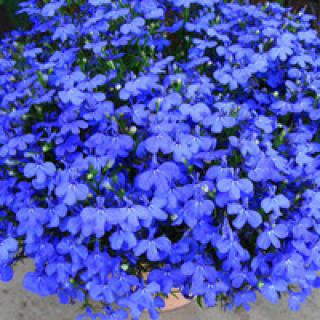
From our perspective as Lobelia plants, the answer to your question begins with understanding our fundamental nature. Many of us, like the popular trailing Lobelia erinus, are technically tender perennials. This means that in our native habitats, which are often mild, we live for several years. However, we are not equipped with the internal mechanisms to withstand freezing temperatures. Our cellular structure is soft and full of water; when this water freezes, it expands and ruptures our cell walls, causing fatal damage. In colder climates, gardeners often treat us as annuals, accepting that our life cycle concludes with the first frost. Therefore, the concept of "overwintering" is an intervention—a human-assisted process to circumvent our natural limitations.
Can we survive winter indoors? Yes, it is possible, but it is not a simple move. Bringing us inside before the first frost is crucial. The sudden shift from the bright, humid outdoors to a typically darker, drier indoor environment is a significant shock to our system. To maximize our chances, we would ask you to prepare us. About six weeks before the planned move, please prune us back by about one-half to two-thirds. This does more than just make us more compact; it encourages a flush of new, tougher growth that is better adapted to lower light conditions. It also reduces the leaf surface area from which we lose precious moisture. Additionally, this is the time to check our roots and foliage meticulously for any pests like aphids or spider mites. An infestation that was minor outdoors can explode in the controlled indoor environment, quickly overwhelming our already stressed systems.
Once indoors, our needs are specific. We do not seek to grow vigorously through the winter; we merely wish to enter a state of dormancy or very slow growth to conserve energy. Light is our most critical requirement. A bright, sunny south-facing windowsill is ideal. An east or west window might suffice, but we will likely become leggy as we stretch weakly towards the light. Conversely, a dark corner is a death sentence. Temperature is the next vital factor. We do not want to be in your warm living room. We need a cool environment, ideally between 50-60°F (10-15°C). An unheated but frost-free sunroom, a bright garage window, or a cool basement with a grow light are perfect. This coolness signals to us that it is time to rest. Watering must be drastically reduced. Allow the top inch or two of soil to dry out completely between waterings. Our roots are highly susceptible to rot in cool, damp soil when our growth has slowed.
If you successfully shepherd us through the winter, the lengthening days of late winter and early spring will signal a new beginning. You will notice new, green growth emerging from our base. This is the time to gradually increase watering and begin applying a diluted, balanced fertilizer to support this new growth. However, the journey is not over. Just as moving indoors was a shock, moving back outdoors must be a gradual process known as "hardening off." About two weeks after the last frost date, please start placing us in a sheltered, partially shaded spot outdoors for a few hours each day, gradually increasing our exposure to sun and wind over 7-10 days. This slow reacclimation allows our tender new leaves to toughen up against the elements, preparing us for another season of vibrant growth and flowering in your garden.