To answer whether Lobelia is a perennial or an annual, we must first clarify these botanical terms from a plant's perspective. An annual plant completes its entire life cycle—from seed germination, growth, and flowering to seed production and death—within a single growing season. Its survival strategy is to invest all its energy into producing a massive number of seeds to ensure the next generation. In contrast, a perennial plant lives for more than two years. It typically flowers and sets seed over multiple seasons. Perennials often have structures like crowns, rhizomes, or bulbs that allow them to survive unfavorable conditions (such as winter cold or summer drought) and regrow when conditions become favorable again. The answer for Lobelia is not singular; it depends entirely on the species and its environmental context.
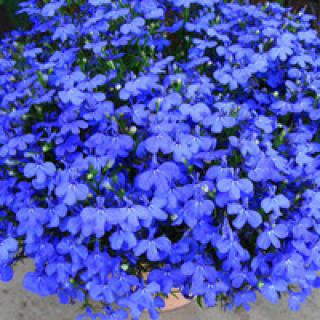
The most widely recognized Lobelia in gardens is Lobelia erinus. From a botanical and horticultural standpoint, this species is typically grown as a tender annual in most temperate climates. Native to South Africa, Lobelia erinus is not frost-tolerant. It thrives in the cool weather of spring and fall but will be killed by the first hard frost of winter. Its life cycle as an annual in these regions is absolute; the parent plant dies after seed setting. However, it is a prolific self-seeder. The plant produces vast quantities of tiny seeds, which can drop to the ground, lie dormant through the winter, and germinate the following spring, giving the impression of a returning plant, though each is a new genetic individual. In its native habitat or in USDA hardiness zones 10-11, where frost does not occur, Lobelia erinus can indeed behave as a short-lived perennial, persisting for several years.
Conversely, several Lobelia species are true, hardy herbaceous perennials. These plants have evolved to survive cold winters and re-emerge each spring from their rootstock. A prime example is Lobelia cardinalis, commonly known as Cardinal Flower. Native to the Americas, it is perennial in USDA zones 3-9. It forms a basal rosette of leaves and sends up tall flower spikes in late summer. After flowering and setting seed, the above-ground portion of the plant dies back to the ground. However, the root crown remains alive underground, protected from freezing temperatures, and will send up new growth the next spring. Another notable perennial is Lobelia siphilitica (Great Blue Lobelia), which shares a similar growth habit and hardiness. These perennial species have a different growth strategy, investing energy into strong root systems for long-term survival rather than the rapid, single-season seed production seen in annuals.
The classification of a Lobelia plant is therefore heavily influenced by its geographic location and local climate. A plant's life cycle is a direct response to its environment. A species that is a perennial in its native range or in a compatible hardiness zone may be forced to behave as an annual in a colder or hotter climate where it cannot survive the seasonal extremes. For instance, a gardener in Minnesota (zone 4) will experience Lobelia erinus strictly as an annual, while a gardener in southern California (zone 10) can grow it as a perennial. Similarly, a perennial like Lobelia cardinalis might struggle and die over a winter if planted in a region with a climate that does not match its needs, such as an area with wet, cold soil that causes the crown to rot. The plant's physiology dictates its potential, but the environment determines its realized life cycle.
Finally, from a practical gardening perspective, the distinction is often made by how the plant is cultivated. Nurseries and garden centers typically market Lobelia erinus cultivars as "annuals" because they are intended for seasonal color and will not survive the winter in most areas. Breeders have even selected for traits desirable in annuals, such as continuous blooming without setting seed (deadheading). Perennial Lobelias are marketed as such and are chosen for their ability to form permanent clumps in the landscape. It is crucial for a gardener to identify the specific species or cultivar they are purchasing to understand its growth habit and requirements, as the common name "Lobelia" applies to a diverse genus with varied life strategies.