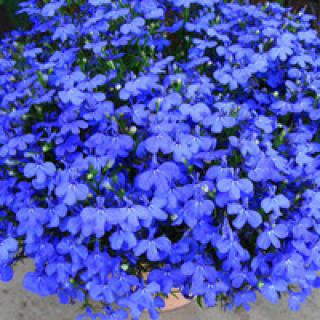
To answer whether Lobelia can tolerate heat and humidity, we must first clarify which Lobelia we are discussing. The genus Lobelia encompasses a diverse group of over 400 species, ranging from delicate annuals to hardy perennials, each with its own native habitat and corresponding environmental preferences. The common garden Lobelia (Lobelia erinus), often seen spilling over the edges of containers and garden beds in cool seasons, is a tender perennial typically grown as an annual. This species originates from South Africa, which gives a clue to its preferences: it thrives in mild conditions and strongly dislikes the combination of intense heat and high humidity. Conversely, other species like the Cardinal Flower (Lobelia cardinalis) and the Great Blue Lobelia (Lobelia siphilitica) are native to North American wetlands, making them far more equipped to handle hot, humid summers, provided their soil moisture needs are met.
For the common Lobelia erinus, a hot and humid environment presents a significant physiological stress test. High temperatures accelerate the plant's metabolic processes, including transpiration (the loss of water vapor from leaves). While transpiration cools the plant, excessive water loss can lead to wilting and root damage if the soil dries out too quickly. Humidity complicates this further. When the air is saturated with moisture, the transpiration rate slows down because the gradient between the moist leaf interior and the humid exterior is reduced. This impaired cooling mechanism can cause the plant to overheat, leading to heat stress. Symptoms include wilting, scorched or bleached leaves, stunted growth, and a cessation of flowering as the plant enters a survival mode. Furthermore, humid, stagnant air creates an ideal breeding ground for fungal pathogens like powdery mildew and botrytis (gray mold), which can quickly devastate the dense foliage of Lobelia.
While Lobelia erinus struggles, other Lobelia species are much better suited for such conditions. The Cardinal Flower (Lobelia cardinalis) is a prime example. Naturally found along stream banks and in moist meadows, it is genetically programmed for warm, humid summers. Its vibrant red flowers are a highlight of the late summer garden when many other plants have faded. Similarly, the Great Blue Lobelia (Lobelia siphilitica) shares this tolerance, thriving in similar moist-to-wet soils in partial shade to full sun. Plant breeders have also recognized the need for more resilient varieties. They have developed specific cultivars of Lobelia erinus that are marketed as more heat-tolerant. Series like 'Laguna' and 'Hot' have been selected for their ability to withstand warmer temperatures and re-bloom more reliably after a summer stress period than standard varieties.
Even for the more sensitive Lobelia erinus, strategic gardening practices can extend its performance through a hot, humid period. The single most important factor is consistent soil moisture. The roots must never be allowed to dry out completely, but equally, they should not sit in waterlogged soil, which can lead to root rot. Applying a thick layer of organic mulch around the plants helps immensely by keeping the root zone cool and conserving moisture. Providing afternoon shade is another critical intervention. Shielding the plants from the most intense heat of the day reduces water loss and prevents scorching. In high humidity, promoting good air circulation by avoiding overcrowding and ensuring proper spacing is vital to discourage fungal diseases. Finally, a mid-summer pruning or "haircut" can rejuvenate a stressed plant. Cutting it back by one-third to one-half after a flush of flowering encourages fresh, new growth that is better adapted to the current conditions and can produce a new crop of blooms.