From our perspective as Lobelia plants, the practices of pruning and deadheading are not acts of violence but rather forms of beneficial communication. They signal to us that it is time to redirect our energy, which ultimately leads to a more vigorous and floriferous life. Here is a detailed explanation of how these actions affect us.
As annual or perennial flowering plants, our primary biological imperative is to reproduce. We produce flowers to attract pollinators, which leads to the development of seeds. Once a flower is pollinated and begins to form a seed pod, our mission for that particular branch is nearly complete. We then divert a significant portion of our energy away from producing new flower buds and into maturing those seeds. This is a natural and efficient process for ensuring our genetic legacy, but it does mean that the show of colorful blooms for the gardener will slow down and eventually stop. Pruning and deadheading interrupt this cycle, convincing us that our work is not yet done.
Deadheading is the simple act of removing individual spent flowers. From our point of view, when you pinch or snip off a faded bloom before it can form a seed pod, you are essentially deleting the "mission accomplished" signal. The stem that held that flower receives a hormonal message that reproduction was not successful. In response, it will often try again by producing a new lateral shoot, or side branch, that will bear a new flower bud. To do this correctly, trace the faded flower's stem down to the next set of healthy leaves or leaf node (the point on the stem where leaves emerge). Make a clean cut just above this point. This not only removes the spent bloom but also encourages bushier growth from that node.
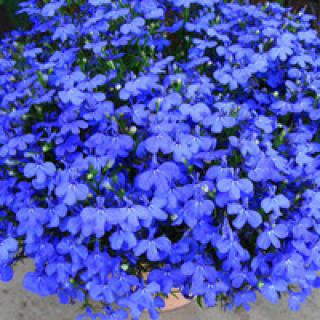
While deadheading is a precise tactic, pruning is a more strategic approach. This is especially helpful for trailing or mounding Lobelia varieties that can become leggy—where the stems grow long with sparse leaves and flowers at the ends—by midsummer. When our stems get too long, the sap has to travel a great distance from the roots to the tips, making flower production less efficient. A more significant prune, cutting the entire plant back by one-half to two-thirds, is a powerful reset. This may seem drastic, but it stimulates a surge of new growth from the base of the plant. The result is a denser, more compact form with many new growing tips, each of which has the potential to produce a flower cluster. The best time for this major prune is typically after the first major flush of flowers begins to fade.
When you perform these tasks, you are directly influencing our internal energy distribution. The carbohydrates and nutrients we gather through photosynthesis are no longer siphoned into seed production. Instead, that energy is redirected into vegetative growth and the creation of new flower buds. Furthermore, by cutting us back, you are removing older, potentially less productive growth and allowing better air circulation and light penetration to the center of the plant. This helps keep us healthy by reducing the risk of fungal diseases that thrive in damp, crowded conditions. A healthy plant is, fundamentally, a more capable flowering plant.