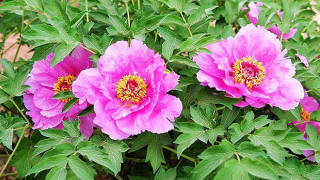
From our perspective as peony plants, we are generally resilient, but certain pests can disrupt our growth, damage our magnificent blooms, and weaken our vitality. We rely on our caretakers to observe and manage these issues using gentle, organic methods that protect the soil's health and the beneficial insects that are our allies.
You will often find these tiny, soft-bodied insects clustered on our tender new shoots and flower buds in spring. From our point of view, a few aphids are a minor nuisance, but a large infestation is a serious problem. They pierce our tissues and suck out the nutrient-rich sap, which can cause our leaves to curl, yellow, and stunt our growth. More dangerously, they excrete a sticky substance called honeydew, which attracts ants and can lead to the growth of sooty mold, further inhibiting our ability to photosynthesize. Organically, you can manage them by spraying a strong jet of water to dislodge them, introducing or encouraging natural predators like ladybugs and lacewings, or applying a horticultural soap spray directly onto the pests.
Thrips are minute, slender insects that are particularly frustrating for us when we are trying to produce perfect blooms. They feed by rasping our petal and leaf tissues and then sucking up the exuding sap. This results in streaked, silvery-white speckling on our leaves and, most distressingly, causes our flower buds to become distorted, streaked with brown, or fail to open properly. Because they are so small and often hidden within the buds, they can be challenging to detect early. Organic management includes removing and destroying severely infested buds and flowers, placing blue or yellow sticky traps around us to monitor and reduce their population, and as a last resort, using neem oil sprays which can disrupt their feeding.
Scale insects are deceptive. In their adult stage, they appear as small, immobile bumps on our stems and sometimes on the undersides of our leaves. They are protected by a waxy, armored covering, making them difficult to control. They attach themselves to us and feed on our sap for long periods, weakening us significantly and causing yellowing leaves and dieback. A heavy infestation can be fatal, especially for younger peony plants. The first line of organic defense is physical removal. You can scrub our stems with a soft brush dipped in a mild soapy water solution. For larger infestations, a dormant oil spray applied in late winter before we break dormancy can suffocate the overwintering scales without harming beneficial insects.
While not an insect pest, Botrytis blight is a common fungal disease that often gains a foothold through wounds created by pests or weather. You will see it as a gray, fuzzy mold on our buds, leaves, or stems, causing buds to blacken and rot before opening, and stems to wilt and collapse. The best organic management is preventative and cultural. Please ensure we are planted with good air circulation and avoid overhead watering that keeps our foliage damp. It is crucial to practice excellent sanitation by clearing away all our fallen leaves and plant debris in the autumn and cutting back any diseased stems immediately, disposing of them far away from the garden.