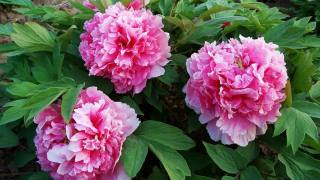
From our standpoint as a peony plant, the green foliage we produce each spring and summer is not merely decorative; it is our solar power factory and energy storage system. Throughout the growing season, our broad leaves absorb sunlight and, through the process of photosynthesis, convert it into vital carbohydrates. This energy is not only used for immediate growth and the spectacular blooming display you enjoy but is also transported down to our underground storage organs – the roots and especially the "eyes" (next year's growth buds). As autumn approaches and daylight wanes, this process of storing energy for the dormant season becomes our absolute priority. Cutting back our foliage too early is akin to unplugging a battery before it is fully charged, jeopardizing our strength for the following year.
The decision on when to cut back our foliage is not an arbitrary date on your calendar; it is dictated by our internal biological clock and external environmental signals. The key trigger is the first hard frost. A killing frost will cause our foliage to die back naturally. You will observe this as the leaves and stems turning yellow, then brown, and collapsing. This color change is a critical visual indicator. The yellowing signifies that we are actively breaking down chlorophyll and translocating the remaining nutrients back into the root system. This is the final, crucial step in our energy conservation process. Cutting us back while our leaves are still mostly green interrupts this natural relocation of resources.
Therefore, the ideal time for you to intervene is after the first hard frost of autumn has blackened or thoroughly browned the foliage. This event confirms that our work for the season is complete. We have successfully stored all the energy we can, and the above-ground growth is no longer functional. At this point, the foliage begins to decay and can become a potential harbor for fungal spores and diseases, such as botrytis blight, which could overwinter and affect us in the spring. By cutting back the foliage at this stage, you are assisting us by removing a potential source of infection and allowing us to enter dormancy cleanly and healthily.
When you perform the cutback, please do so with care. Using sharp, clean pruning shears, cut our stems down to within about 2 to 3 inches (5 to 7.5 cm) of the soil level. It is important to avoid cutting into the fleshy crown where the "eyes" are located. These reddish buds are next year's stems in their infancy, and damaging them will result in fewer, or even no, blooms. After cutting, gather all the foliage and dispose of it away from the garden or destroy it. Do not compost this material, as composting may not generate enough heat to kill any lingering disease pathogens. Leaving this debris on the soil surface around us can create a cycle of reinfection.
By waiting for the correct physiological sign—the frost-induced dieback—you are acting as a true partner in our life cycle. This practice directly supports our long-term health and vitality. A plant that is allowed to complete its natural process of nutrient resorption will enter dormancy with a fully stocked energy reserve. This results in a more robust emergence in spring, with stronger stems, larger, more vibrant flowers, and a greater resistance to pests and diseases. Your patience in the fall is directly rewarded with our spectacular performance the following May or June.