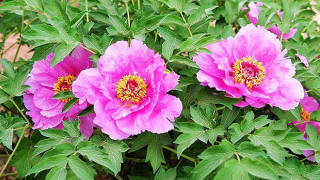
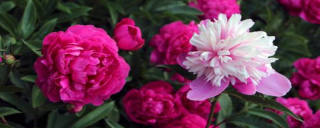
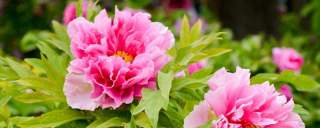
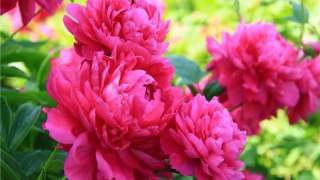
Peonies are the undisputed queens of the late spring garden, celebrated for their extravagant, often fragrant blooms and handsome foliage. However, their reign is relatively brief, and their substantial, shrub-like form leaves gaps in the garden after they fade. The key to a stunning, season-long display is to choose companion plants that complement the peony's needs and aesthetics while extending visual interest before, during, and long after the peony's bloom period.
Selecting plants with staggered bloom times creates a dynamic garden that evolves throughout the seasons. To accompany the peony's main performance, consider early spring bulbs that flower and begin to die back as peony foliage emerges. Species tulips (Tulipa clusiana), grape hyacinths (Muscari armeniacum), and late-blooming daffodils are excellent choices, as their fading foliage will be concealed by the expanding peony bush. For simultaneous bloom, the vertical spires of Foxgloves (Digitalis purpurea) or Delphiniums provide a stunning contrast to the peony's rounded, bowl-shaped flowers. The airy, cloud-like blooms of Lady's Mantle (Alchemilla mollis) spill softly around the peony's base, softening its bold structure.
A peony's greatest asset after blooming is its foliage, which remains a deep green, sometimes with attractive autumn tints. Pairing it with plants that have contrasting leaf shapes and textures ensures the border remains compelling. The large, heart-shaped leaves of Hosta varieties provide a dramatic textural contrast and thrive in the same growing conditions. The fine, feathery foliage of Astilbe or the slender, arching blades of ornamental grasses like Hakonechloa macra 'Aureola' create a soft, elegant backdrop. For a bolder statement, the sculptural, spiky leaves of Iris sibirica or the silvery, felted leaves of Lambs' Ears (Stachys byzantina) offer striking visual counterpoints.
Peonies can become top-heavy after rain, and their stems may flop. Low-growing, clump-forming perennials can help disguise this and cover the bare "legs" of the plant. Catmint (Nepeta), with its profusion of small, lavender-blue flowers and gray-green foliage, is a classic peony partner that blooms for an extended period. Coral Bells (Heuchera) offer a palette of foliage colors—from lime green to deep purple—that can highlight or complement peony blooms. As the peony's foliage begins to decline in late summer, later-blooming perennials like Sedum 'Autumn Joy' or Japanese Anemones will rise to prominence, filling the space and carrying the garden's interest into fall.
The most crucial consideration from a plant's perspective is compatibility in cultural needs. Peonies require full sun to light shade, well-drained but moist soil rich in organic matter, and good air circulation to prevent fungal diseases. All companion plants must share these requirements to thrive. Avoid aggressive spreaders or plants with dense, invasive root systems that will compete with the peony's delicate, fleshy roots. Plants like Bearded Iris, which also prefer a sunny, well-drained spot with their rhizomes sitting near the surface, make ideal neighbors. Similarly, Salvia and Russian Sage (Perovskia atriplicifolia) enjoy the same sunny, well-drained conditions and their upright forms and blue flowers create a beautiful color harmony with pink, white, or red peonies.