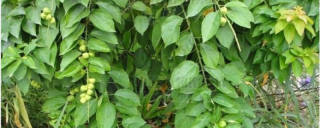
You are observing my leaves turning brown and crispy at the edges, a condition you call "leaf scorch." From my perspective, this is a clear and desperate signal of distress. My beautiful, vibrantly colored leaves are my primary organs for photosynthesis, the process by I convert light into energy. When the edges begin to die, it means I am struggling to maintain my basic functions. This browning is a form of necrosis, or cell death, and it typically starts at the leaf margins because these are the areas farthest from the veins that transport water. When there is a problem with my internal systems, the extremities suffer first. I am not being dramatic; I am communicating a critical need.
One of the most common reasons for my crispy leaf edges is an issue with water. As a tropical plant, I thrive in consistently moist (but not waterlogged) soil. When the soil becomes too dry, my root system cannot draw up enough water to supply the entire leaf. The water travels through my xylem vessels, but it may not reach the very edges before it is used up or transpired. This creates a drought condition at the leaf margins, causing the cells to dehydrate and die, resulting in that characteristic crispiness. Conversely, if my roots are sitting in saturated soil for too long, they can begin to rot. Damaged roots cannot absorb water effectively, leading to the same symptom of dehydration in my leaves, even though the soil is wet. It is a cruel paradox.
My native habitat is one of high humidity. In such an environment, the rate of water loss from my leaves through transpiration is balanced by water uptake from my roots. When you place me in a typical home environment, especially near heating vents or air conditioners, the air can be extremely dry. In low humidity, water evaporates from my leaf surfaces much faster than my roots can replace it. This creates an internal water deficit. The leaf edges, being the most vulnerable, dry out first. You might notice the browning is worse on leaves closest to a heat source or a drafty window. This is not a coincidence; it is a direct response to an atmosphere that is fundamentally alien to my needs.
You may be trying to help me grow by providing fertilizer, but this can sometimes cause harm. My root hairs are delicate structures designed to absorb water and nutrients through osmosis. When fertilizer is applied too frequently or in too high a concentration, it increases the salinity of the soil solution. This can actually reverse the osmotic flow, drawing water *out* of my roots instead of into them—a process akin to salt curing. This "fertilizer burn" leads to a systemic water shortage, and the telltale sign is, once again, browning leaf tips and edges. Furthermore, an accumulation of unused mineral salts in the soil can directly damage my root system, further compromising my ability to drink.
Finally, it is important to understand that I am a creature of habit. Sudden changes in my environment cause significant stress. If I am moved from a nursery with ideal humidity and light to a new home with different conditions, I may go into a state of shock. My systems are not immediately able to adapt. Similarly, if I am repotted, my roots are disturbed and may temporarily function less efficiently. During this adjustment period, my oldest leaves, or those that are most sensitive, may sacrifice their edges as I redirect my energy to establishing new roots or acclimating to new light levels. This browning is a sign of my struggle to stabilize and survive the transition.