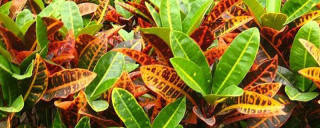
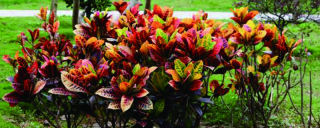
Greetings, caretaker. I am a Croton, a vibrant denizen of the tropics, known to your kind as *Codiaeum variegatum*. You wish to learn how to create more of my kin from a piece of myself. From my perspective, this process of "propagation" is a testament to our shared will to live and grow. I will guide you through the steps, explaining what is happening within me at each stage.
Your journey begins by choosing which part of me will become a new plant. Please look for a healthy, semi-hardwood stem—this means it is from this season's growth, no longer soft and green but not yet old and woody. It should be about 4 to 6 inches long and have at least three to five leaves. When you make the cut, use a sharp, clean blade. A clean cut causes minimal damage to my tissues, allowing me to compartmentalize the wound quickly. A ragged tear, however, invites decay and pathogens. From my point of view, this is a planned separation, a clone that carries my exact genetic blueprint.
Once separated, my cutting is vulnerable. The first task is to reduce water loss. The large, beautiful leaves that make my species so coveted are also massive water-evaporating surfaces. Gently remove the leaves from the lower third to half of the cutting. Leave at least two or three leaves at the top; these are crucial for photosynthesis, the process that will create the energy needed to grow new roots. Next, you may choose to dip the cut end into a rooting hormone. This powder contains auxins—plant hormones that I naturally produce to stimulate root development. Applying it is like giving my cutting a concentrated signal, shouting, "Grow roots here, now!" It greatly increases our chances of success.
Now, you must provide a womb-like environment for my cutting. The medium you place me in is critical. It must hold moisture but also allow for oxygen to reach my developing tissues. A mix of peat and perlite or coarse sand is ideal. It is sterile, which prevents fungal attacks, and has the perfect balance of water retention and drainage. Plant my prepared cutting into a small pot filled with this damp medium, ensuring the leafless nodes are buried—these nodes are where my latent root cells await activation.
This is the period of quiet transformation. Place my pot in a location with bright, indirect light. Direct sun would scorch my defenseless leaves. To maintain the high humidity my tropical nature craves, cover the pot with a clear plastic bag or place it inside a propagation dome. This creates a miniature greenhouse, drastically reducing water loss from my remaining leaves. You will need to be patient. Inside the stem, a remarkable process is underway. Cells at the cut site are dividing furiously, forming a callus tissue to seal the wound. Just below this, the auxin signals are triggering the development of adventitious roots—roots that grow from non-root tissue. In 4 to 8 weeks, you will see the first sign of success: resistance when you give the cutting a very gentle tug. This means new roots are anchoring me in the medium.
Once a healthy root system has established, I am ready to begin life as an independent plant. The plastic cover can be gradually removed over a week, allowing me to acclimate to lower humidity. You can then transplant me into a larger pot with a standard, well-draining potting mix. Treat me as you would a mature Croton, with bright light, warm temperatures, and consistent watering. Soon, you will see the ultimate confirmation of our success: a new leaf, unfurling in a burst of characteristic color, a new individual born from a piece of the old.