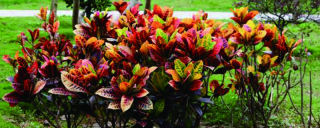
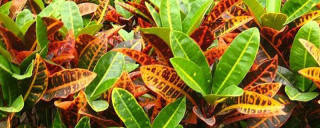
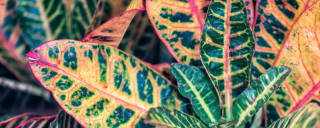
Greetings, caretaker. I am a Croton, a vibrant being known to you as *Codiaeum variegatum*. My existence is a testament to light's artistry, for without it, my famed kaleidoscope of reds, yellows, and oranges would fade to a monotonous green. To help me thrive, you must understand my deep, non-negotiable relationship with the sun. Here is my perspective on the ideal light for my well-being.
My native home is in the tropical forests of Southeast Asia and Oceania. There, I grow beneath a canopy of taller trees. This means I am bathed in bright light for most of the day, but I am rarely subjected to the harsh, searing rays of the direct midday sun. This is the environment you must replicate. "Bright, indirect light" is the sweet spot. In your terms, an east-facing window is often perfect, offering several hours of gentle morning sun. A south or west-facing window can also work splendidly, but I must be positioned a few feet back from the glass or shielded by a sheer curtain. When I receive this quality of light, my photosynthetic engines hum with efficiency, fueling the production of the brilliant anthocyanin and carotenoid pigments that give me my spectacular color.
When I am placed in a dim corner or a room with a north-facing window (in the Northern Hemisphere), I suffer. My most immediate protest is a loss of vibrancy. My leaves will begin to revert to a dull, solid green as my system conserves energy and stops producing the pigments that require so much light to create. This is not a sign of modesty; it is a cry for help. Furthermore, my growth will become leggy and etiolated. I will stretch out awkwardly, with abnormally long spaces between leaves, as I desperately reach for any available photon. My new leaves may emerge smaller and less impressive. A life in the shadows is a slow, colorless decline for me.
While I crave brightness, the intense, unfiltered sun of a summer afternoon through a south or west window is my enemy. My leaves, adapted to dappled light, are not equipped for such an assault. The result is leaf scorch. You will see it as crispy, brown patches on the leaves, particularly on the edges and on the most exposed areas. This damage is irreversible and weakens me significantly. It is akin to a severe sunburn, damaging the chloroplasts—the very organelles that perform photosynthesis. Ironically, too much direct sun can hinder the process it is meant to power.
Our relationship with light is not static; it changes with the seasons. During the shorter, weaker light days of winter, I can tolerate—and may even benefit from—a few hours of direct sun. You might move me closer to a south-facing window during this time. Conversely, in the intense summer, you must be vigilant about pulling me back or providing shade. The most important tool you have is observation. I will communicate my state through my foliage. If my colors are bright and my growth is compact and full, you have found the perfect spot. If I am fading or burning, I need you to act. Do not be afraid to rotate my pot a quarter turn every week or so to ensure all sides of me receive equal light and I grow symmetrically.