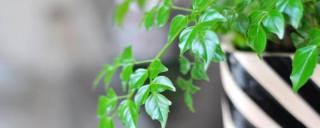
First, we must clarify which "Emerald Tree" you are referring to, as this common name can apply to different plants. The most likely candidate is the Emerald Green Arborvitae (Thuja occidentalis 'Smaragd'), a popular conical evergreen. From a plant's perspective, my identity is defined by my genetic blueprint, which is a product of my evolutionary history. I am a cultivar of the Eastern White Cedar, native to the cool, humid forests of northeastern North America. My very cells are programmed to expect a specific climate cycle: cold winters with insulating snow, moderate summers, and consistent moisture. This native environment is the baseline for my temperature tolerance; it is the condition for which my physiological processes are perfectly adapted.
My ability to live outdoors in cold climates is not passive; it is an active physiological achievement. As temperatures drop in autumn, I undergo a complex process called cold acclimation. I sense the shortening day length and cooler temperatures, which triggers a hormonal response. I begin to move water out of my living cells into the spaces between them. This dehydration prevents intracellular ice crystals from forming and puncturing the delicate cell membranes, which would be fatal. Simultaneously, I increase the concentration of sugars, proteins, and other solutes within my cells, which acts as a natural antifreeze, lowering the point at which the remaining water freezes. My foliage, comprised of scale-like leaves, is also designed to minimize water loss through transpiration, a crucial adaptation for surviving frozen ground that makes water uptake impossible.
While I am hardy, my tolerance has absolute limits, typically defined by the USDA Plant Hardiness Zone system. I am generally suited for zones 3 to 7, meaning I can survive minimum winter temperatures between -40°F and 0°F (-40°C to -18°C). However, these are survival thresholds for my root system and main branches. Extreme cold below my tolerance, especially when sudden or prolonged, can cause die-back of foliage and young stems, turning them brown. Furthermore, winter desiccation is a major threat. On sunny or windy winter days, my needles can lose moisture through transpiration, but if the ground is frozen, my roots cannot replace it. This results in browning or "winter burn," primarily on the south and west sides exposed to the most sun and wind.
The question of outdoor living is not solely about cold. From my perspective, excessive heat can be just as stressful, if not more so, than extreme cold. My physiology is optimized for cool to moderate temperatures. When planted in zones 8 or higher, where summer temperatures consistently soar, I experience heat stress. My rate of transpiration increases dramatically to cool myself, risking water loss that outpaces my root system's ability to absorb it from the soil. High night-time temperatures are particularly taxing, as they prevent me from adequately respiring and recovering from the day's heat. This chronic stress weakens my defenses, making me highly susceptible to pests like spider mites, which thrive in hot, dry conditions, and fungal diseases that can quickly exploit a stressed plant.
My success outdoors is not just about the hardiness zone number on a map. The specific microclimate of the planting site is critical. A location sheltered from harsh, drying winds, perhaps by a building or other trees, can significantly improve my winter survival. Similarly, a spot with afternoon shade can protect me from the intense heat of a summer afternoon. Furthermore, a young plant like myself, recently transplanted from a controlled nursery environment, has not had time to fully develop a robust root system or undergo natural acclimation. I am more vulnerable to temperature extremes in my first few years and require careful watering and, in very cold zones, perhaps temporary winter protection like a burlap screen to shield me from desiccating winds while I establish myself.