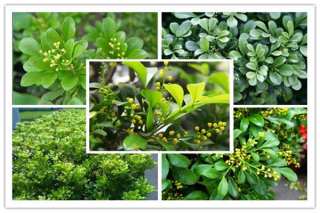
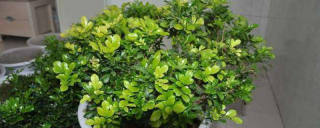
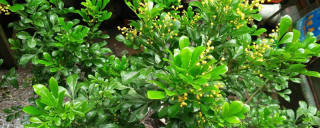
Greetings, human caretaker. I am Aglaia odorata, though you may know me as the Chinese Perfume Plant or Mock Lime. I sense your desire to witness and enjoy my delicate, fragrant blossoms within the confines of your home. From my perspective as a plant, achieving this is a matter of understanding and replicating the conditions of my preferred habitat. To encourage me to flower indoors, you must listen to my needs for light, rest, nourishment, and stability.
First and foremost, I am a child of the sun. In my native Southeast Asian forests, I bask in dappled but bright light for many hours each day. My very ability to produce flowers is governed by the energy I capture through photosynthesis. When you place me indoors, a dim corner is a sentence to a leafy, but flowerless, existence. I require the brightest spot you can provide, ideally directly in front of a south or west-facing window. The light should be strong enough to cast a faint, clear shadow. If your home lacks such intensity, consider supplementing with a grow light. This artificial sun tells my internal chemistry that it is time to produce the tiny, golden-yellow buds you find so enchanting. Without this crucial energy, I simply lack the resources to bloom.
You must understand that I cannot flower continuously. Like many flowering shrubs, I require a period of rest. During the shorter, cooler days of winter, my growth slows considerably. This is not a sign of illness, but a natural and vital cycle. You can support this by reducing your watering frequency, allowing the top layer of my soil to dry out more thoroughly between drinks. Also, please withhold fertilizer during this time. This period of cooler temperatures (around 60-65°F or 15-18°C is ideal) and reduced resources is essential for me to set buds for the next growing season. If you keep me warm, wet, and fed all winter, I may continue to grow leaves, but I will become confused and unlikely to produce a prolific display of flowers come spring.
When the days begin to lengthen in spring, I will signal my awakening with new growth. This is the time to begin feeding me. However, the type of nourishment is critical. A fertilizer high in nitrogen will encourage me to produce an abundance of lush, green leaves at the expense of flowers. What I need is a fertilizer with a higher proportion of phosphorus (the middle number in the N-P-K ratio), which directly supports bud formation and blooming. A balanced, water-soluble fertilizer formulated for flowering plants, applied every two to four weeks during the active growing season, will provide me with the precise nutrients required to power my fragrant display.
Finally, my overall well-being is key. I prefer to be slightly root-bound; a pot that is too large holds excess moisture around my roots, which I find stressful and which can lead to rot. Repot me only when absolutely necessary. Furthermore, the air indoors, especially with heating or air conditioning, can be very dry. My origins are in humid climates, and I appreciate a gentle misting of my leaves or placement on a pebble tray filled with water to increase local humidity. When I am free from the stress of soggy roots or parched air, I can channel all my energy into what you desire most: my clusters of tiny, intensely fragrant blooms.