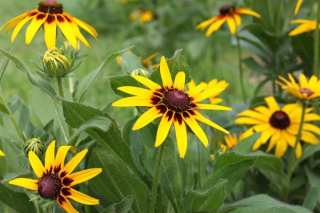
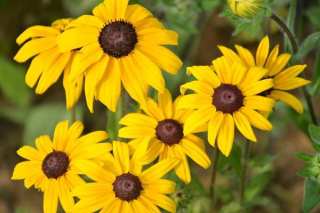
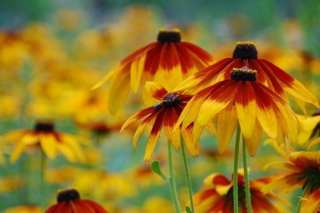
From a botanical perspective, the question of whether Coreopsis is a perennial or an annual cannot be answered with a single, simple response. The genus Coreopsis, a member of the Asteraceae family, encompasses over 80 species, and their lifecycles are a direct result of their genetic programming and evolutionary adaptations. Fundamentally, a plant's status as an annual, biennial, or perennial is determined by its strategy for survival and reproduction. Annuals complete their entire lifecycle—from seed germination to flowering and seed production—within a single growing season, after which the parent plant dies. Perennials, in contrast, live for three or more years, typically flowering and setting seed repeatedly. The Coreopsis genus contains species that are true herbaceous perennials, true annuals, and some that are short-lived perennials, which behave almost like annuals or biennials in certain climates.
A classic example of a perennial Coreopsis is Coreopsis grandiflora (Large-flowered Tickseed) or Coreopsis verticillata (Threadleaf Coreopsis). For these plants, the lifecycle begins when a seed germinates in spring. The seedling develops a root system and a rosette of leaves close to the ground. Unlike an annual, which would rapidly send up a flowering stalk, the perennial Coreopsis invests its energy in establishing a robust root system, often including rhizomes or crowns that will survive the winter. The plant enters a period of vegetative growth. It may not flower in its first year, prioritizing root and leaf development to ensure long-term survival. Once established, the plant will emerge from its crown each spring, sending up new stems, flowering profusely throughout the summer, and setting seed. The parent plant's root system remains alive underground during winter dormancy, ready to regenerate the following spring. This cycle can continue for many years, making it a true perennial.
In contrast, an annual species like Coreopsis tinctoria (Plains Coreopsis) follows a much faster, singular lifecycle. Its strategy is one of rapid reproduction. The seed germinates, and the plant grows quickly, channeling all its resources into producing a flowering stem in a matter of weeks. It blooms prolifically, attracts pollinators, and sets a large quantity of seed. Once the seeds have matured, the biological purpose of the parent plant is fulfilled. It has no need to survive the winter because its genetic lineage is secured by the seeds it has produced. The entire plant—roots, stems, and leaves—will die with the first hard frost. The following spring, a new generation of plants will grow solely from the seeds that were scattered the previous year.
A crucial point from a plant's viewpoint is that environmental conditions can significantly influence the expression of a lifecycle. Some Coreopsis species, such as Coreopsis rosea, are perennial but are considered short-lived, persisting for only two to three years. In less-than-ideal conditions, such as heavy, poorly drained clay soil or extreme winter wetness, even a genetically perennial Coreopsis may die after one or two seasons, behaving like an annual. Conversely, in optimal conditions with perfect drainage and full sun, it may live longer. Furthermore, many modern horticultural cultivars, bred for extravagant and continuous blooming, exhaust their energy reserves so quickly that they die after a few seasons, a phenomenon known as "blooming themselves to death." This is not a change in their fundamental classification but a demonstration of how cultivation practices can interact with a plant's innate biology.