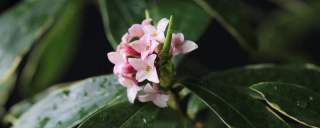
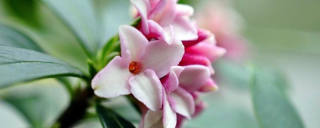
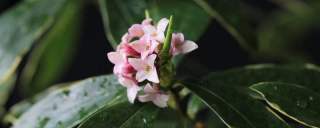
Before you make the first cut, it is essential to understand my internal calendar. I am not a plant that responds well to heavy-handed pruning at any time. My primary goal is to flower and set seed, and my energy is meticulously allocated to this purpose. The safest and most beneficial time to prune me is immediately after my main flowering period has concluded. For most Daphne varieties, this is in late spring or early summer. At this moment, my energy is shifting from sustaining blooms to producing new vegetative growth. Pruning now allows me to readily heal the wounds and direct my resources into producing a flush of new, healthy stems and leaves, which will bear next season's flower buds. Pruning too late in the summer or autumn risks removing these newly formed buds, sacrificing next year's fragrant display.
From my perspective, pruning is not about controlling size but about maintaining health and a pleasing shape. I am a slow-growing shrub, and a drastic reduction in size can be a severe shock from which I may not recover. My stems do not readily break dormancy from old, leafless wood. Therefore, the golden rule is gentle, selective pruning. Think of it as tidying up rather than restructuring. The objective is to remove only what is necessary – the three Ds: Dead, Damaged, or Diseased wood. This can and should be done at any time of year you spot it, as it prevents energy waste and potential disease spread. Beyond this, light shaping is all that is required.
The manner in which you make the cut is critical to my health. Please use sharp, clean bypass pruners. Crushing or tearing my bark with dull tools creates a large, ragged wound that is an open invitation for pests and fungal infections. When removing an entire branch, make your cut just flush with the main stem or a larger lateral branch, without leaving a stub. For shortening a stem to encourage bushiness, locate a point just above a set of leaves or a leaf node that faces the direction you want the new growth to develop. Make a clean, angled cut about a quarter of an inch above that node. This precise incision allows me to compartmentalize the wound efficiently, sealing it off and protecting my internal systems.
My needs can vary slightly depending on my age and form. For a young plant, your goal is to encourage a dense, well-branched habit. After flowering, you can lightly tip-prune the new, soft growth. This signals to me to send out side shoots from the leaf nodes below the cut, resulting in a fuller shrub. For an established, mature plant, the focus is on maintenance. Concentrate on removing any spindly, weak growth crowding my center to improve air circulation. If I have become slightly leggy, you can selectively cut back a few of the longer, older stems by up to one-third of their length, making the cut where it will be hidden by lower foliage. Always step back and assess after each cut; remember, you can always cut more later, but you cannot reattach a branch.