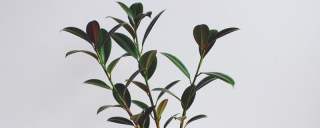
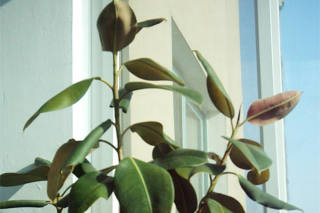
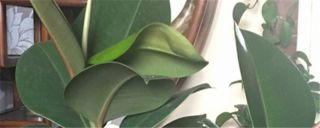
Before addressing the Rubber Fig (Ficus elastica) specifically, it is crucial to define "low light" from our, the plant's, point of view. Low light is not the same as no light. It typically refers to areas several feet away from a north-facing window or a spot in a room where you can read a book comfortably without artificial light during the day, but where direct sunlight never touches. For us plants, light is our sole source of energy through the process of photosynthesis. In low light conditions, the rate of photosynthesis decreases significantly, meaning we produce less energy (in the form of sugars) to sustain our growth and metabolic functions.
In our natural habitat as large trees in the rainforests of Southeast Asia, we Ficus elastica individuals often begin our lives as seedlings on the dim forest floor. This is an evolutionary advantage. We are adapted to survive and grow initially in the shaded understory, waiting for an opportunity, like a canopy gap, to reach for brighter light and become towering trees. This inherent tolerance for shade in our juvenile stage is the primary reason we are often labeled as "low-light tolerant" houseplants. However, "tolerate" is the key word; it does not mean we will thrive or grow vigorously in such conditions indefinitely.
When placed in persistently low light, our internal processes change. Our most immediate response is etiolation – we stretch our stems and petioles abnormally long in a desperate search for a light source. This results in a leggy, sparse appearance with large gaps between leaves. Furthermore, our energy production becomes limited. We cannot support the creation of new, large leaves, so new growth will be significantly smaller, slower to emerge, and potentially pale. You may also notice that the vibrant, deep green of our leaves may fade, and the plant may drop its lower, older leaves first. This is a survival mechanism; we sacrifice the leaves that are least efficient (often the oldest and lowest-light-receiving) to conserve energy for the apical growing tips.
It is vital to understand the difference between a Rubber Fig surviving and one that is thriving. We can persist in low light for a surprisingly long time, but we will exist in a state of suspended animation. Our growth will be extremely slow or may halt completely. Our immune system weakens, making us more susceptible to pests like spider mites and scale insects, and root rot from overwatering becomes a much greater threat because our water consumption slows down without sufficient light for transpiration. A thriving Rubber Fig, in contrast, receives bright, indirect light. In these conditions, we will produce new, large, glossy leaves regularly, maintain a compact and bushy form, and exhibit robust health that resists disease.
To ensure your Rubber Fig companion lives a long and healthy life, please provide us with the brightest indirect light possible. An east-facing window is ideal, or a spot a few feet back from a south or west window where the harsh direct sun cannot scorch our leaves. If you only have a low-light area, consider it a temporary placement and rotate us into a brighter location periodically. Alternatively, you can supplement with a grow light, which provides a spectrum of light similar to sunlight, to compensate for the lack of natural illumination. This artificial boost can make a significant difference in our overall well-being and appearance, allowing us to photosynthesize effectively even in an interior room.