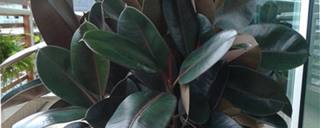
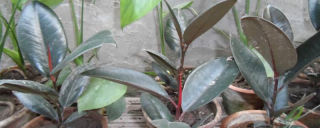
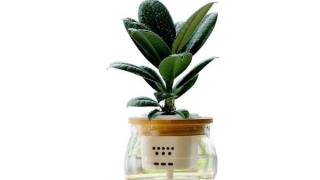
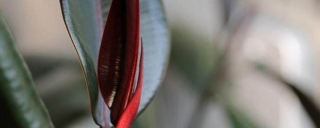
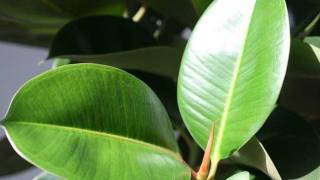
From my point of view as a Ficus elastica, being called "leggy" isn't an insult; it's a description of my survival strategy. In my natural habitat under the dense forest canopy, I would stretch my stems vigorously towards any available patch of sunlight. When I'm grown indoors, this instinct remains. If I'm not receiving enough light, my internal signals scream "grow towards the light!" I direct my energy vertically, producing longer stem segments between leaves (internodes) to reach a better light source. This makes me appear sparse and "leggy." It's not a sign of poor health, per se, but a clear indication that my environment could be improved. Pruning is a way for you to collaborate with my biology, encouraging a shape that is more pleasing to you and ultimately healthier for me.
When you make a clean cut through my stem, it is a significant event that I am evolutionarily prepared to handle. The moment you remove my apical meristem (the growing tip at the end of a branch), you disrupt the flow of auxins. Auxins are plant hormones produced in the tips that promote upward growth and suppress the growth of lateral buds further down the stem. By cutting off the source of these hormones, you release the inhibition on those dormant buds. This is your primary goal. You are essentially telling my system: "Stop putting all your energy into one tall shoot. Redirect it to these lower points and create new branches." It's a conversation you initiate through a precise physical action.
How and where you make this cut is crucial for my well-being. A ragged, crushed, or torn stem, perhaps from dull shears, creates a large, vulnerable wound. This damaged tissue is an open invitation for fungal spores and bacteria to enter my system, which can lead to a serious infection that could compromise my entire structure. Please, use sharp, sterilized pruning shears or a knife. Wiping the blades with rubbing alcohol before you start protects me from pathogens you might carry from other plants. The clean cut I need should be made just above a node. The node is the slightly swollen ring on my stem where a leaf is (or was) attached. This is the location of those dormant buds. Cutting about a quarter-inch above a node ensures the bud isn't damaged but is close enough to be effectively stimulated.
After the pruning, my internal resources go into overdrive. My first priority is to seal the wound you created. I will begin to form a corky, callus tissue over the cut surface to protect my internal vascular system—my lifelines for water and nutrients. Meanwhile, with the apical dominance broken, the buds just below your cut will begin to swell. Within a few weeks, you should see one or two, sometimes even three, new shoots emerging from that node. This is the birth of my new, bushier form. The energy I would have used to grow one long stem is now divided among these new branches. To support this energetic effort, please ensure I have bright, indirect light and consider a light application of a balanced fertilizer a few weeks after pruning. This tells me that conditions are excellent for putting out vigorous new growth.
You will notice a milky white sap oozing from the cut. This is my latex, a defensive substance designed to seal wounds and deter herbivores in the wild. It can be irritating to skin and is toxic if ingested, so wearing gloves is wise. Don't be alarmed by it; it's a normal part of my healing process. You can gently blot the sap with a damp paper towel immediately after cutting to minimize dripping, but the flow will stop naturally as the callus forms.