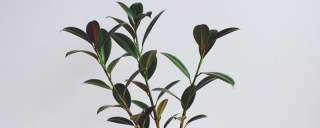
From my perspective as a rubber plant (*Ficus elastica*), achieving a bushy, branched form is not my default setting. In my natural habitat, my primary goal is to reach the sunlight above the forest canopy, which means growing tall and straight with a single, dominant stem. Branching is a stress response, a strategy I employ when my apical growth is compromised. To encourage this bushier habit in your home, you need to understand and gently manipulate my natural instincts. Here is how you can work with my biology.
At the very tip of my main stem, I have a special bud called the apical meristem. This bud produces a hormone called auxin, which travels down the stem and suppresses the growth of the lateral (side) buds lower down. This system, known as apical dominance, ensures my energy is focused on vertical growth to outcompete other plants for light. To make me bushier, you must interrupt this signal. When the apical meristem is removed or damaged, the auxin flow stops. The lateral buds, no longer inhibited, perceive this as an opportunity to grow, as they assume the main leader has been lost to an animal or falling branch. This is the fundamental concept behind all branching techniques.
Pruning is the most effective way to break my apical dominance. It is a deliberate injury that triggers my survival response. To do this correctly, you must be precise. Locate a node on the main stem—this is the point where a leaf attaches, and you will see a small, slightly raised bump on the opposite side; that is a lateral bud waiting in reserve. Using clean, sharp shears, make a clean cut about half an inch above your chosen node. Once the apical meristem is gone, the auxin supply to the buds below the cut is halted. Within several weeks, you should see one or two of those lateral buds below the cut begin to swell and push out new stems and leaves. For an even fuller plant, you can prune these new branches once they have developed 3-4 leaves of their own, repeating the process.
If you are not ready to commit to removing a large portion of my stem, you can try notching. This involves making a small, shallow cut *above* a node and bud you wish to stimulate. By cutting into the stem, you partially disrupt the flow of auxin past that point, which can be enough to weaken its suppression on the bud directly below the notch. It is a less guaranteed method than pruning but allows for more controlled branching. For younger, softer stems, you can simply pinch out the very tip of the new growth with your fingers. This is a mild form of pruning that can encourage lower buds to activate without a major cut.
Branching is an energy-intensive process for me. After you have prompted me to grow new stems, I need adequate resources to support this effort. Please ensure my basic needs are met. Place me in bright, indirect light; this is the fuel for photosynthesis. Water me thoroughly only when the top inch or two of soil is dry, as my roots need oxygen as much as they need water. During the growing season (spring and summer), feed me with a balanced, diluted fertilizer. This provides the essential nutrients, particularly nitrogen, needed to produce the proteins and chlorophyll for all this new foliage. Without proper light and nutrients, my response to pruning will be weak, and new growth may be sparse.
Finally, you must understand my timeline. I do not respond overnight. After a pruning event, it will take me time to redirect my resources and break the dormancy of my lateral buds. Do not be alarmed if you see no change for a few weeks. Continue to provide consistent care and observe me closely. The first sign of success will be a slight swelling of the bud, followed by the emergence of a tiny, often reddish, new leaf. This process cannot be rushed. Your patience will be rewarded with a denser, more robust form that fills out its space beautifully.