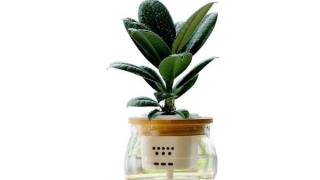
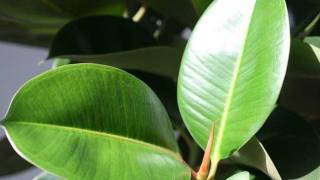
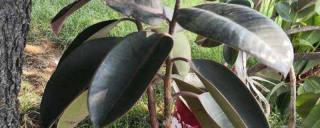
From my perspective as a Rubber Fig, my entire existence hinges on capturing light. If I'm not producing new leaves, the most fundamental issue is likely an energy deficit. New growth is an expensive process, requiring a significant investment of sugars produced through photosynthesis. If the light is too dim, my photosynthetic factories (the chloroplasts in my leaves) operate at a reduced capacity. I simply cannot manufacture enough food to support both my existing structure and the creation of new stems and leaves. I might enter a state of survival, maintaining what I have but not expanding. Conversely, harsh, direct sunlight can scorch my large, delicate leaves, damaging the very equipment I need to create energy. I desire bright, indirect light—the kind that filters through the canopy of taller trees in my native habitat.
What happens below your soil line is critical to my ability to grow above it. My roots are my mouth and my anchor. Let's discuss hydration first. Consistently soggy soil is a death sentence. It suffocates my roots, preventing them from absorbing oxygen and leading to rot. A rotting root system cannot transport water or nutrients to my stems, stunting growth and eventually killing me. On the other hand, if the soil becomes a dry brick, my roots desiccate and cease function. I need soil that is consistently moist but never waterlogged. Furthermore, if I have been in the same pot for years, my roots may have become pot-bound. They circle the container, forming a tight mass with little room to expand and access new nutrients. In such a cramped space, I am essentially strangling myself, and all my energy goes to just sustaining the root mass, with nothing left for new foliage.
Think of new leaves as complex structures built from specific materials. Even with perfect light and water, if my soil is depleted of essential nutrients, I lack the raw materials for construction. The primary elements I need are Nitrogen (N) for green, leafy growth, Phosphorus (P) for healthy root and shoot development, and Potassium (K) for overall physiological functions. If I have been in the same soil for a long time, I will have consumed most of the available nutrients. A lack of nitrogen, in particular, will directly halt the production of new leaves, as I cannot synthesize the necessary proteins and chlorophyll. I may also show my displeasure by yellowing my older leaves to redirect the scarce nitrogen to more critical functions.
I am a tropical plant, and my metabolism is tuned to a specific climate. Sudden drafts from doors or air conditioning units, or proximity to a heat vent, can cause significant stress. These temperature fluctuations signal danger, prompting me to conserve resources rather than expend them on growth. Similarly, the dry air common in many homes, especially during winter, is challenging. Low humidity increases the rate of water loss from my leaves (transpiration). If the air is too dry, I may close my stomata (pores) to conserve water, which also limits the intake of carbon dioxide needed for photosynthesis. This slows my entire system down. I thrive in stable, warm temperatures and appreciate a humidity level that reminds me of my jungle origins.
Finally, it is important to understand my natural rhythm. I do not grow at a constant, relentless pace. There are periods of active growth, typically in the spring and summer when light levels are higher, and periods of rest in the fall and winter. During these dormant periods, it is perfectly normal for me to pause the production of new leaves. This is a time for consolidation, not expansion. Pushing for growth during this time with excessive fertilizer or water can be counterproductive. Sometimes, the solution is not an action, but patience, waiting for the right seasonal cues to trigger my next growth spurt.