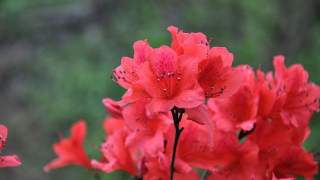
From a plant's perspective, dormancy is not a state of inactivity but a highly controlled survival strategy. For potted azaleas (Rhododendron spp.), dormancy is a direct response to environmental cues, primarily decreasing day length and falling temperatures. As autumn progresses, the plant perceives these changes through photoreceptors in its leaves and stems. This triggers a hormonal shift: growth-promoting hormones like gibberellins decrease, while growth-inhibiting hormones like abscisic acid (ABA) increase. ABA plays a crucial role in preparing the plant for winter by signaling the cessation of new growth, promoting bud set, and initiating cold-hardening processes. The plant is essentially conserving its finite energy resources, redirecting them from vegetative growth to root maintenance and preparing its buds to withstand the cold.
The dormancy period for an azalea is not a single event but a sequence of two distinct physiological stages. The first stage is endo-dormancy (or rest). This is an internal, genetically programmed state where growth will not occur even if external conditions become favorable. The meristematic tissues within the buds are actively inhibited by the high levels of ABA. For the azalea to break endo-dormancy, it must experience a sufficient period of chilling, typically temperatures between 32°F and 45°F (0°C and 7°C). This chilling requirement is a specific need that varies by cultivar; it ensures the plant does not resume growth during a brief mid-winter warm spell, which would be fatal. Once the chilling requirement is met, the plant enters eco-dormancy (or quiescence). In this stage, internal growth inhibitors have been deactivated, but growth remains halted because the external environment—specifically, cold soil and air temperatures—is still unfavorable. The plant is now simply waiting for the right external trigger to begin growing again.
As a potted azalea enters dormancy, you can observe clear physical signs. The most noticeable is that the plant stops producing new leaves and flowers. Existing leaves may appear duller, and for some deciduous varieties, they will drop entirely. Evergreen azaleas will retain their leaves, but growth ceases. Internally, the plant is undergoing significant changes. Cellular metabolism slows dramatically. Water content within the cells is reduced, and sugars and other cryoprotectants are concentrated in the bud scales and living tissues to act as a natural antifreeze, preventing ice crystals from forming and rupturing cell membranes. The buds for the next season's growth, which were formed in the previous summer, become tightly sealed and hardened, protecting the delicate embryonic leaves and flowers inside from desiccation and freezing.
The transition out of dormancy is as critical as entering it. Once the chilling requirement is satisfied and temperatures begin to warm in late winter or early spring, the azalea responds to the increasing light levels and warmer soils. The hormonal balance shifts once more, with gibberellins and cytokinins promoting cell division and elongation. The buds begin to swell, and the scales loosen in preparation for bud break. For a potted azalea, this period is particularly vulnerable. A sudden, drastic temperature swing or improper watering can cause significant stress. The plant has expended energy to survive the winter and is now mobilizing its remaining reserves to fuel the explosive growth of flowering and leafing out. Any disruption during this phase can lead to bud blast (where flower buds dry up and fall off) or weak, stunted growth, as the plant's carefully managed energy budget is thrown off balance.