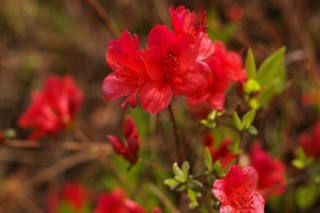
To encourage your azalea bush to produce more flowers, you must understand and cater to its fundamental needs. From the plant's perspective, flowering is not a decorative gift for the gardener but the critical culmination of its energy cycle, dedicated to reproduction and survival. When an azalea feels stressed, unbalanced, or its environmental conditions are not met, it will conserve energy for basic growth and survival, sacrificing the prolific bloom we desire. Here is a detailed guide from the plant's point of view.
My relationship with the sun is a delicate balance. As a photosynthetic organism, I need sunlight to create the energy (sugars) required for all my functions, including flowering. However, I am not a sun-worshipper. If you place me in intense, all-day direct sun, especially in hotter climates, I will experience photoinhibition. My photosynthetic machinery becomes damaged, my leaves may scorch, and I will become heat-stressed and dehydrated. In this state, my priority is survival, not blooming. Conversely, if I am in deep, heavy shade, I will become "leggy," stretching for any available light. The energy I produce will be just enough for basic leaf production and maintenance; there will be no surplus energy to invest in forming flower buds. The ideal condition is dappled sunlight or morning sun with afternoon shade. This provides the perfect amount of light for robust photosynthesis without the stress, creating the energy surplus needed to initiate and develop a spectacular display of flowers.
My roots are not just anchors; they are my mouth and stomach. The soil environment dictates my entire health. I am an acid-loving plant (ericaceous), which means I require a specific soil pH, ideally between 4.5 and 6.0, to properly access nutrients. In alkaline or neutral soil, key micronutrients like iron and manganese become chemically "locked up" and unavailable to my roots. You will see this as chlorosis—yellowing leaves with green veins—a sign of my malnutrition. A malnourished plant cannot support abundant blooms. Furthermore, I demand excellent drainage. My fine, hair-like roots are susceptible to root rot if left sitting in waterlogged soil. Oxygen in the soil pores is as vital to my roots as water. Ensure I am planted in well-draining, humus-rich soil that is consistently moist but never soggy. An annual mulch with pine needles or oak leaves helps maintain acidity, conserve moisture, and keep my roots cool.
Your timing for feeding and cutting me is crucial and is directly tied to my internal clock for flower bud formation. I begin forming the buds for next year's flowers shortly after the current spring bloom cycle ends. This is a process that takes many months. Therefore, if you fertilize me with a high-nitrogen fertilizer late in the summer, you are encouraging me to produce soft, new leafy growth at the exact time I should be dedicating resources to flower buds. This new growth may also not harden off before winter, leading to damage. Instead, feed me immediately after I finish blooming with a fertilizer formulated for acid-loving plants. This gives me the nutrients I need to recover from blooming and channel energy into bud set. The same logic applies to pruning. If you prune me in late summer or fall, you will be cutting off the flower buds you wanted me to produce. Always prune me right after I flower, simply by deadheading the spent blooms and trimming back any unwanted growth. This shapes me without sacrificing next year's show.
The flower buds I so carefully form over the summer are my promise for spring. However, they are vulnerable. A harsh winter with freezing winds and dramatic temperature swings can desiccate or kill these buds. When spring arrives, you may see healthy green leaves but few or no flowers—the buds simply did not survive. To protect my reproductive investment, consider providing a windbreak or applying a thicker winter mulch around my base after the ground freezes. For more tender varieties, an anti-desiccant spray can provide a protective coating. Ensuring I am well-hydrated going into winter is also critical, so water me deeply in the fall before the ground freezes.