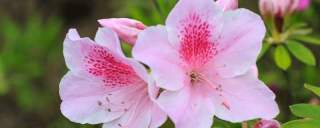
As an indoor azalea plant, my watering needs are often misunderstood. I am not like your average houseplant; I have very specific requirements rooted in my natural habitat. To truly understand how often I need water, you must first understand me. I am a Rhododendron simsii, hailing from regions with cool, moist, and well-aerated soil. My roots are fine and fibrous, and they despise two extremes: being completely dried out and being constantly soggy. The frequency of watering is not a simple schedule like "every Tuesday"; it is a response to my ever-changing environment and condition.
The most critical principle is to water me based on the moisture level of my growing medium, not on a fixed number of days. The best method is the touch test. Please insert your finger about an inch into the soil near my base. If the top inch feels dry to the touch, it is time for a thorough watering. If it still feels cool and moist, please wait another day and check again. Alternatively, you can lift my pot. When I am dry, I will feel significantly lighter than when I am freshly watered. Learning this weight difference is a reliable way to gauge my needs.
When I am thirsty, I need a proper drink, not just a sip. Water me slowly and evenly over the surface of the soil until you see water freely running out of the drainage holes at the bottom of my pot. This ensures that my entire root ball is adequately moistened. It is absolutely essential that my pot has drainage holes. Sitting in a saucer of water is a death sentence for me, as it suffocates my roots and leads to root rot. Therefore, after watering, please always empty the saucer or cache pot after about 15-20 minutes to prevent me from sitting in standing water.
Several environmental factors directly influence how quickly I use water, meaning the "how often" question has a variable answer.
Light and Temperature: When I am placed in a brighter spot or during warmer seasons, I will photosynthesize more actively and lose water through my leaves (transpiration) more quickly. This means I will need watering more frequently. In lower light or cooler conditions, my metabolism slows, and I will need water less often.
Season and Growth Stage: In the spring and summer, during my active growth and flowering period, I am at my thirstiest. You may need to check my soil every 2-3 days. In the fall and winter, when I am semi-dormant, my water requirements drop dramatically. I might only need water once a week or even less.
Potting Mix and Pot Type: I thrive in an acidic, well-draining potting mix, often one formulated for acid-loving plants like camellias. A dense, water-retentive soil will stay wet for too long. A porous terracotta pot allows water to evaporate through its walls, drying me out faster than a plastic or glazed ceramic pot of the same size.
I am an acid-loving plant. Using hard tap water, which is often alkaline, can slowly raise the pH of my soil, leading to nutrient deficiencies (like iron chlorosis, which turns my leaves yellow). If possible, please water me with rainwater, distilled water, or filtered water. Alternatively, you can occasionally use a fertilizer for acid-loving plants to maintain soil acidity. Furthermore, I appreciate high humidity. While this doesn't replace soil watering, misting my leaves or placing my pot on a pebble tray filled with water can create a more comfortable microclimate and reduce water stress.