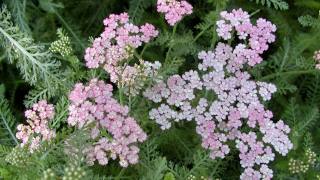
From our perspective as plants, survival is not about luxury but about adaptability. We, the yarrow (Achillea millefolium), have a long evolutionary history that has shaped us into pioneers. Our strategy is not to compete with nutrient-hungry species in rich, loamy soils. Instead, we are specialists in colonization, often being among the first to establish ourselves in disturbed ground, abandoned fields, roadsides, and rocky slopes. Poor soil conditions are not a problem we merely tolerate; they are an opportunity we actively exploit. In these challenging environments, we face less competition from other plants that simply cannot survive without abundant nutrients. Our entire physiology is fine-tuned for thriftiness and efficiency.
The secret to our success lies beneath the surface. We develop a dense, fibrous, and spreading root system that acts as a highly efficient foraging network. Unlike plants with a single, deep taproot designed to seek out deep water tables, our web-like roots explore a vast volume of topsoil horizontally. This allows us to intercept any available nutrients, however scarce they may be. Furthermore, our rhizomatous roots—underground stems that creep and send up new shoots—enable us to form extensive colonies. This network not only helps us secure a larger territory for nutrient gathering but also allows us to store energy reserves, providing a buffer during periods of extreme scarcity. It is a system built for persistence and expansion in lean times.
Our relationship with soil fertility is one of minimalism. We have evolved to have remarkably low nutritional requirements. While other plants may show signs of stunting or chlorosis (yellowing leaves) in nitrogen-poor soils, we continue to grow steadily, albeit often at a more compact pace. Our foliage is typically fine and fern-like, which is an adaptation to reduce surface area and minimize water loss through transpiration—a common challenge in the well-drained, often dry, poor soils we inhabit. More importantly, we are skilled at forming symbiotic relationships with soil fungi, known as mycorrhizae. These fungi extend far beyond our root zone, acting as an extension of our own root system. They are exceptionally efficient at breaking down organic matter and absorbing phosphorus and other micronutrients, which they then trade with us for carbohydrates. This partnership is a cornerstone of our ability to thrive where other plants fail.
It is crucial to understand that "poor soil" for us does not mean "waterlogged soil." Our single greatest intolerance is for consistently wet, heavy clay soils. Our rhizomatous roots are highly susceptible to rot in anaerobic (oxygen-poor) conditions. Therefore, the poor soils we excel in are characterized by excellent drainage. Sandy, gravelly, or rocky soils are ideal because they allow water to percolate away quickly, preventing our roots from sitting in moisture. In a sense, we prefer a soil that is structurally poor—low in organic matter and nutrients—but physically sound in terms of drainage. In fact, overly rich, moist soil can be detrimental to us, causing weak, floppy growth and making us more susceptible to fungal diseases. For yarrow, lean and mean conditions produce the strongest, most resilient plants.