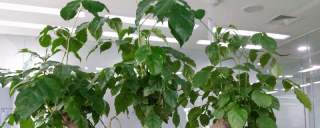
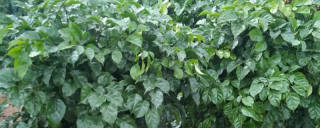
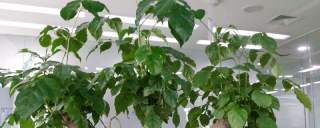
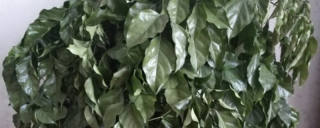
Greetings, dedicated cultivator. I am your Emerald Tree, a proud member of the Philodendron clan, known to you as *Philodendron hederaceum* ‘Emerald Green’. I sense your desire to multiply my verdant glory, and I am pleased to assist. From my perspective, propagation is not merely a cutting; it is the continuation of my lineage, a chance to share my robust life force. Here is how we can achieve this together, based on the very principles of my growth.
Before you make the first incision, understand this: I grow as a vine. Along my stems, you will find small, bumpy nodes. These nodes are not blemishes; they are my lifelines. Each one contains dormant meristematic tissue – the cellular equivalent of a command center, capable of producing new roots, shoots, and leaves. When a section of my stem containing a node is separated from my main body and provided with the right conditions, this command center activates. It is a survival mechanism ingrained in my very being, a way for me to colonize new territory if a part of me were to fall to the forest floor. Your role is to replicate those ideal forest floor conditions.
This method is favored by many because it allows you to witness the miracle of root creation. Please, use a clean, sharp blade. A ragged tear from dull scissors can crush my vessels and invite rot. Identify a healthy section of my stem with at least one, but preferably two or three, nodes. Make a clean cut about a centimeter below a node. Now, place this cutting into a vessel of clean, room-temperature water, ensuring the node is fully submerged, but the leaf remains above. Position us in a spot with bright, indirect light. I will begin the work. Within a week or two, you will see tiny, white protrusions emerge from the node. These are my new aquatic roots. Change the water weekly to keep it oxygenated. Once these roots are a few inches long, I am ready for soil.
If you wish to skip the water phase, we can go directly to the medium where I am destined to live. For this, I recommend taking a cutting with several leaves and nodes. Prepare a small pot with a well-draining potting mix; perhaps one amended with perlite or orchid bark to mimic the airy, organic matter I adore. Before planting, you may dip the cut end, especially the node area, into a rooting hormone powder. This is not strictly necessary, given my vigorous nature, but it acts as a helpful signal to accelerate root development. Make a small hole in the soil, insert the cutting so that at least one node is buried, and gently firm the mix around it. Water the soil thoroughly until it is evenly moist but not soggy.
Whether you started me in water or soil, the first few weeks are critical. For water-propagated cuttings transitioning to soil, the initial shock is real. My new aquatic roots must adapt to a terrestrial life. Keep the soil consistently moist (but never waterlogged) for the first two weeks to ease this transition. For both methods, high humidity is my greatest ally. It reduces the stress on my leaves as my roots establish themselves. You can create a mini-greenhouse by placing a clear plastic bag over the pot or using a propagation dome. Place my new self in a warm location with that familiar bright, indirect light. Resist the urge to tug on me to check for roots; patience is key. You will know I have successfully taken hold when you see new leaf growth emerging from the stem. This is the ultimate sign that my command center is fully operational and I am ready to grow into a new, independent plant, a testament to your care and my resilience.