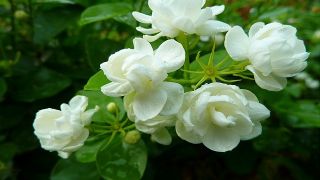
From a botanical perspective, the primary challenge of growing jasmine outdoors in a cold climate is its inherent physiological intolerance to freezing temperatures. Most plants commonly sold as jasmine, such as Jasminum officinale (Common Jasmine) and Jasminum grandiflorum (Spanish Jasmine), are native to warm, temperate to tropical regions like the Mediterranean, Asia, and the Middle East. Their cellular structure is not adapted to withstand ice formation. When water within and between plant cells freezes, it expands, forming sharp ice crystals that rupture cell membranes. This irreversible damage leads to cell death, manifesting as blackened, mushy stems and leaves, ultimately killing the plant if the freeze is severe or prolonged. Therefore, the fundamental answer hinges on whether the specific jasmine species possesses any cold-hardy adaptations.
Not all jasmines are created equal in the face of cold. The key to success lies in selecting a species with a proven ability to survive lower temperatures. The most notable cold-hardy species is Jasminum nudiflorum, commonly known as Winter Jasmine. This plant is a remarkable exception. It is deciduous, losing its leaves in autumn to conserve energy and reduce water loss during freezing weather—a classic adaptation of hardy perennials. Its stems can survive temperatures as low as -15°C (5°F) because they contain higher concentrations of sugars and other compounds that act as a natural antifreeze, depressing the freezing point of water within the cells. In contrast, tender species like Jasminum polyanthum or the popular star jasmine (Trachelospermum jasminoides, which is not a true jasmine but shares similar characteristics) will suffer significant damage or death if temperatures drop below -5°C to -10°C (23°F to 14°F).
Even for a hardy variety like Winter Jasmine, its survival is not guaranteed by the USDA hardiness zone alone. The specific microclimate of your garden is critical. A microclimate is a small area where the climate differs from the surrounding area. To improve a jasmine plant's chances, you should plant it in a location that mimics its preferred conditions as much as possible. This means choosing a south or west-facing wall. The wall absorbs heat during the day and radiates it slowly throughout the night, providing several degrees of frost protection. It also acts as a windbreak, protecting the plant from harsh, drying winds that can cause desiccation—a condition where the plant loses more water from its leaves than it can absorb from the frozen ground.
As a perennial plant preparing for dormancy, a jasmine requires specific care to endure winter. In late autumn, after the first hard frost, apply a thick layer (10-15 cm) of organic mulch, such as bark chips or straw, around the base of the plant. This mulch acts as an insulating blanket for the root zone, preventing the soil from freezing deeply and protecting the vital crown of the plant where new growth emerges in spring. For younger plants or during periods of extreme cold, additional protection may be necessary. Wrapping the plant in horticultural fleece or burlap can shield it from freezing winds and intense winter sun, which can scald the bark. For tender jasmine varieties grown in containers, the only viable option is to bring the entire plant indoors to a cool, bright, frost-free location like a garage or greenhouse before the first frost.
Beyond mere survival, it is important to consider the plant's performance during the growing season. Jasmine plants thrive on warmth and sunlight to fuel photosynthesis and produce their iconic, fragrant flowers. In a cold climate with a short, cool summer, the plant may survive the winter but struggle to grow vigorously or bloom profusely. The reduced intensity and duration of sunlight, coupled with lower average temperatures, can limit the energy available for flowering. A plant that expends significant resources simply to survive winter may have less energy reserves to dedicate to flowering the following season. Therefore, while a hardy jasmine may live in a cold climate, its floral display will likely be far less spectacular than that of a plant grown in a warmer, sunnier region.