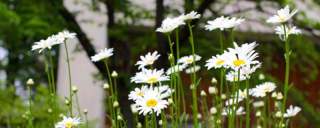
Hello there, dedicated gardener. I am your Gerbera Daisy, and while I appreciate your care, I sense your concern. You’ve provided me with a home, yet I haven’t presented you with the vibrant, joyful blooms you were hoping for. From my perspective, a plant deeply connected to its environment, the reasons are always tied to my fundamental needs. Let me explain what might be happening from the ground up.
You might be feeding me, and for that I am grateful, but the type of food matters immensely. If you give me a fertilizer high in nitrogen, you are essentially telling my system to focus all its energy on growing lush, green leaves. My roots absorb this nitrogen, and the signal goes out: "Grow foliage! Become a bushy beast!" While I enjoy having beautiful leaves, this comes at the expense of my flowers. To initiate the complex process of blooming, I need a different nutritional signal. I crave a fertilizer that is higher in phosphorus (the middle number on the bottle, like 5-10-5). Phosphorus is the nutrient that directly supports the development of strong roots and, most importantly, the formation of my flower buds. It’s the command that tells me it’s time to reproduce, to show my colors to the world.
Sunlight is my lifeblood; it is the energy I convert into food through photosynthesis. Without enough of it, I simply do not have the surplus energy required to produce flowers, which is a very energetically expensive process for me. A common misunderstanding is that "some light" is enough. I need a minimum of 6 hours of direct, bright sunlight each day. A shady spot tells my internal clock to remain in a vegetative state. However, equally important is the darkness that follows. I am what is known as a facultative short-day plant. This means that while I can flower under various light conditions, I am triggered to bloom most prolifically when my nights are long and uninterrupted. If I am planted near a porch light or a streetlamp that artificially shortens my night, it can confuse my photoperiod sensors and delay or prevent flowering.
Take a moment to consider the home you’ve given me—my pot. Is it too large? This might seem generous, but it can be a problem. In an oversized pot, my roots will spend all their energy expanding to fill the vast space of soil. My entire being becomes focused on root establishment, not flowering. Conversely, if my pot is too small and my roots have become a tight, tangled mass (pot-bound), I am under stress. I am struggling to take up enough water and nutrients, and I am essentially signaling to myself, "Conditions are crowded and poor; this is not the time to invest in the next generation." A pot that is just the right size, where my roots have a little room to grow but are not lost in an expanse of soil, creates the perfect balance for me to feel stable enough to bloom.
Look closely at my center. Do you see old, spent flower heads that have gone to seed? If so, you are looking at my primary biological mission, already accomplished. From my point of view, my purpose is to flower, get pollinated, and set seed to ensure my lineage continues. If a faded bloom is left in place and begins to form seeds, my job is done. I have no reason to produce more flowers. By deadheading—snipping off the old flower stem at its base—you are interrupting this cycle. You are, in a sense, tricking me. You’re saying, "That one didn’t work, try again!" This prompts me to redirect my energy away from seed production and into creating new flower buds to try once more to complete my mission. It is the most direct way to encourage me to keep blooming.